

Published on December 9, 2025
Last updated:
Moving a pet from the United States to Italy is absolutely doable, but the timing and paperwork must be exact. When you follow the steps in the right order (microchip → rabies → EU health certificate → USDA endorsement), most dogs and cats arrive in Italy with no issues.
This guide uses the latest EU and US government guidance, plus WorldCare Pet’s internal Italy checklist, to walk you through:
- How to move your pet from the US to Italy (timeline & checklist)
- Which documents your pet needs to enter Italy
- How microchip and rabies rules work for Italy under EU law
- What happens during customs clearance in Italy
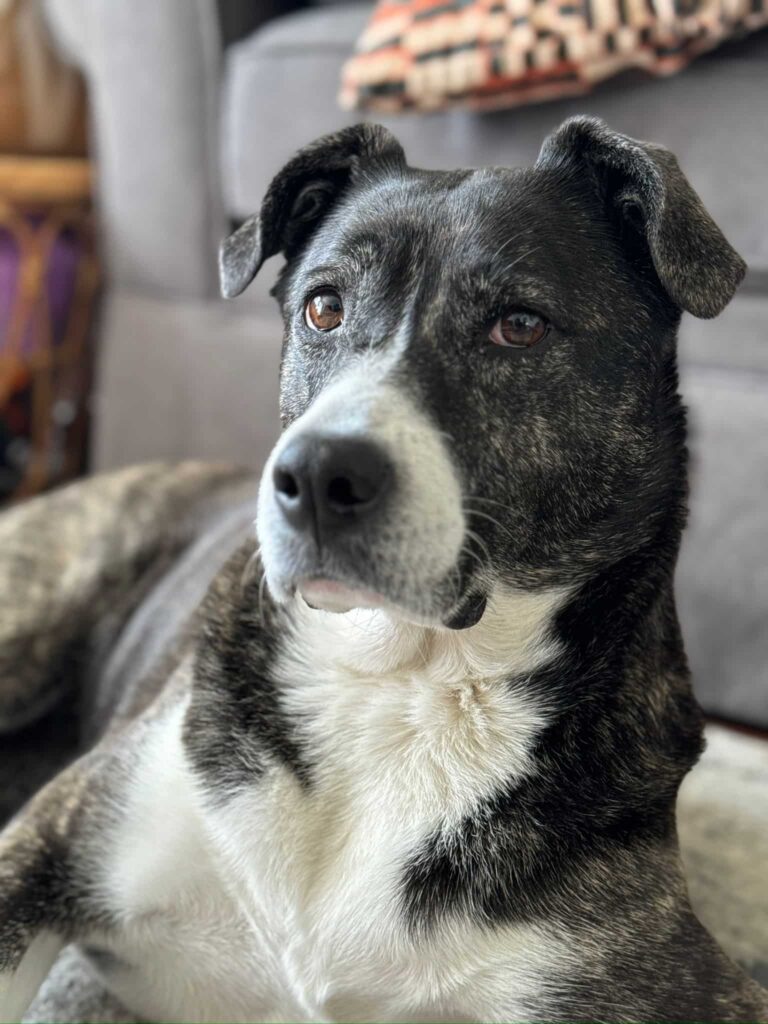
Meet Oreo, the border-collie mix we transported from the USA to her cozy new home in Italy
Italy Pet Travel Requirements from the US
- Microchip first – ISO-compliant 15-digit chip implanted before any rabies shot used for travel.
- Rabies vaccination after the microchip – at least 21 days old (or the manufacturer’s stated immunity period) and still valid at the time your pet enters Italy.
- EU (Italian) pet health certificate + Owner Declaration – completed by a USDA-accredited vet within 10 days of your pet’s arrival in Italy, then USDA-endorsed.
- Fit-to-Fly certificate (APHIS 7001) – often required by the airline, completed at the same visit as the EU health certificate.
- General vaccines strongly recommended – DHPP+L & Bordetella for dogs, FVRCP for cats, especially if boarding is involved.
USA to Italy - Travel in an IATA-compliant crate – with paw-safe ventilation (generally no larger than about 1″ x 1″ for dogs and ¾″ x ¾″ for cats), no sedatives, and clear labels.
- Original documents must travel with your pet – copies are not accepted for entry; originals act as your pet’s “passport” to Italy.
If everything is in order, no routine quarantine is required for pets entering Italy from the USA. Pets that do not meet EU requirements can be refused entry or quarantined at the owner’s expense.
How to Move My Pet from the US to Italy: Step-by-Step Timeline
1–2 Months Before Departure: Planning & Eligibility
1. Confirm your pet is eligible to enter Italy
- Your pet should be at least 12 weeks old to receive a rabies vaccine and meet the minimum age rules under EU law.
- Check for any breed or species-specific airline restrictions (snub-nosed breeds, very large dogs, etc.).
2. Choose your route and airline
- WorldCare Pet typically arranges cargo routes with partner airlines so you don’t have to navigate airline cargo rules alone.
3. Gather existing veterinary records
Ask your vet for:
- Previous rabies certificates, especially if your pet is on a 3-year vaccine schedule, to prove there has been no lapse.
- General vaccination records – DHPP+L & Bordetella for dogs, FVRCP for cats (often required for boarding and strongly recommended for travel).
Step 1 – Microchip (Must Come First)
- Your pet must have a working, ISO-compliant 15-digit microchip implanted before any rabies vaccine is used for travel to Italy.
- Ask your vet to scan the microchip at every appointment to make sure it matches every document.
- Keep a copy of the microchip certificate showing implantation date, chip number, pet details, and vet details; this becomes part of your pet’s “passport” for Italy.
If the microchip cannot be read or is recorded incorrectly on any paperwork, it can cause delays or problems at customs.
Step 2 – Rabies Vaccination (21-Days)
After the microchip, your USDA-accredited vet will give your pet a rabies vaccine. For entry from the USA into Italy:
- The rabies vaccine must be at least 21 days old on the day your pet enters Italy.
- The vaccine must be still valid when your pet arrives (no lapse in coverage).
- A 3-year rabies vaccine can be accepted only if you can prove there was no lapse since the primary vaccine. If there was ever a gap, the next vaccine is treated as a new “primary” and is only valid for 1 year under EU rules.
Your rabies certificate should show:
- Owner’s full name and address (matching your passport).
- Pet’s name, species, breed, sex, age, microchip number.
- Vaccine name, manufacturer, lot/batch number, vaccination date & expiry, and vaccine sticker.
- Vet clinic name, vet name, license number, address, and hand-signed signature.
Step 3 – General Vaccinations (Strongly Recommended)
These vaccines are not mandatory for entry but are highly recommended for safe travel and often required by boarding facilities:
- Dogs:
- DHPP+L (Distemper, Hepatitis, Parvovirus, Parainfluenza & Leptospirosis)
- Bordetella (kennel cough), done in the last 6 months
- Cats:
- FVRCP (Feline Viral Rhinotracheitis, Calicivirus, Panleukopenia)
- FVRCP (Feline Viral Rhinotracheitis, Calicivirus, Panleukopenia)
If your pet will stay in a boarding facility before or after travel, these vaccines are typically required.
For more on pre-flight prep, see Pet Travel Tips Before Flight and ABCs of Pet Travel.
Step 4 – Italian EU Health Certificate & Owner Declaration (Within 10 Days of Arrival)
Within 10 days of your pet’s arrival in Italy, a USDA-accredited veterinarian must:
- Perform a full health exam to confirm your pet is fit to travel.
- Scan the microchip and verify that the number appears on all documents.
- Complete the Italian Annex IV EU Health Certificate (non-commercial movement from the US to Italy)
- Have you sign the Owner Declaration on the last page, confirming this is a non-commercial move and your pet is not being sold.
WorldCare Pet’s Documents Team typically pre-completes the Italian EU Health Certificate and sends it to your vet for their original signature, reducing the chance of errors.
Important: If your pet is not traveling within ±5 days of your own travel, or if you’re moving more than five pets, the move can become “commercial” under EU rules and may require different paperwork. Always tell your Pet Relocation Counselor if your pet’s travel dates don’t match yours.
Step 5 – USDA Endorsement & Fit-to-Fly Certificate
Once your vet completes the Italian EU health certificate (and Owner Declaration):
- The certificate must be endorsed by USDA APHIS.
- Your pet must arrive in Italy within 10 days of USDA endorsement.
- Many airlines also require an International Fit-to-Fly Certificate (APHIS 7001) completed at the same visit as the EU certificate; this document confirms your pet is healthy enough to travel and meets airline requirements.
WorldCare Pet coordinates with your vet and USDA to streamline this step.
Step 6 – Travel Crate & Flight Day
On the day of travel:
- Your pet travels in an IATA-compliant travel crate with:
- Enough space to stand, turn around, and lie down comfortably.
- Paw-safe ventilation on the front and sides (vents typically no larger than about 1″ x 1″ for dogs and ¾″ x ¾″ for cats).
- No sedation: Sedatives are prohibited. At altitude, they can affect breathing and circulation differently than on the ground, and airlines will refuse a pet that appears sedated.
- Food & water:
- Usually a light meal the night before and access to water in the crate.
- Avoid large meals right before departure.
For extra help choosing a crate, see Measuring Your Pet For the Correct Size Travel Carrier and How to Reduce Your Pet’s Travel Carrier Anxiety.
Step 8 – Arrival, Checks & Customs in Italy
When your pet lands in Italy:
- They are taken to a customs-controlled area, where officials:
- Scan the microchip.
- Check all original documents (EU certificate, Owner Declaration, rabies certificate, microchip proof, APHIS 7001, customs documents).
- Customs clearance typically takes 3–6 hours. While pets are in customs, updates and photos are not permitted. This is normal.
- Pets are offered water during customs processing.
If you are using a dedicated pet relocation company such as WorldCare Pet, once your pet is cleared, they will be delivered to your home or a designated meeting point in Italy, depending on your chosen service level.
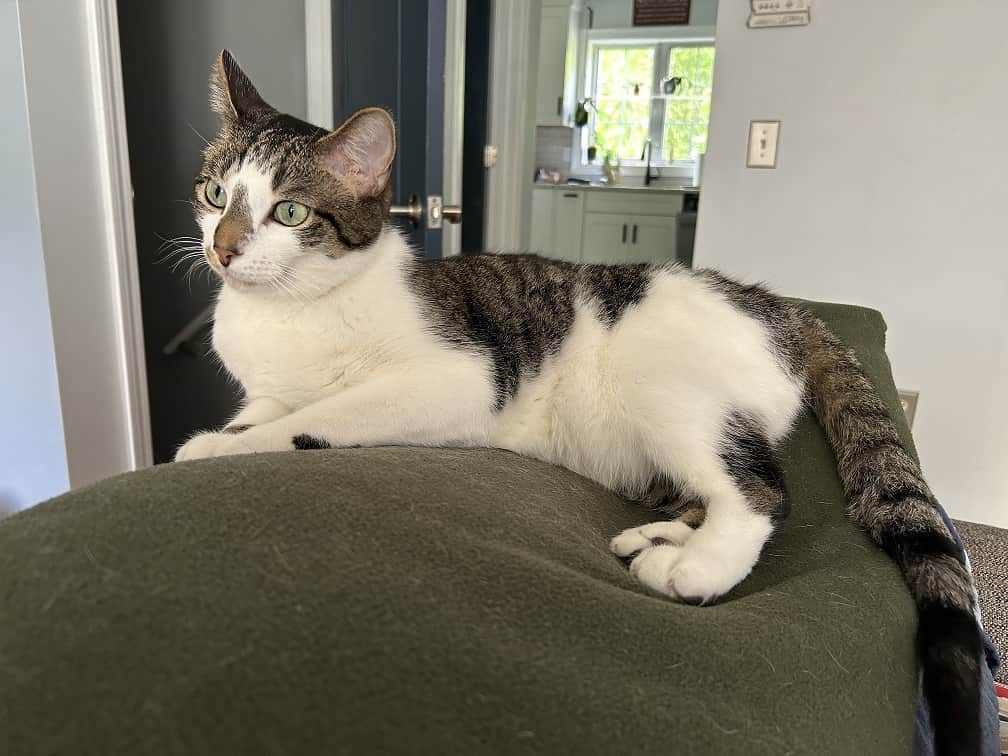
Chili has already found the perfect sunbathing spot in his new home in Italy.
Can You Fly from the US to Italy with a Dog or Cat?
Short answer: often yes, but the how depends on the airline, route, and your pet’s size.
Many international airlines flying to Italy:
- Allow small pets in cabin on some routes to Italy (subject to size/weight limits and advance booking).
- Require larger dogs and some cats to travel as manifest cargo, in a pressurized, temperature-controlled hold.
Working with a professional pet shipper like WorldCare Pet helps you:
- Choose an airline and route that will accept your pet and crate size.
- Make sure your crate, labels, and documentation meet IATA, airline, and EU standards.
- Coordinate drop-off, customs clearance, and delivery to your new home in Italy.
How Long Do Dogs and Cats Have to Quarantine in Italy from the USA?
If you follow all the EU rules, your dog or cat usually has no quarantine at all when entering Italy from the USA.
However, pets can be refused entry or quarantined (at your expense) if:
- The microchip number can’t be read or doesn’t match the documents.
- Rabies vaccination was given before the microchip or the 21-day waiting period was not completed.
- The EU health certificate was not completed or endorsed correctly, or is the wrong type (commercial vs non-commercial).
- You exceed the 5-pet limit or the move is considered commercial and the paperwork doesn’t match.
Using WorldCare Pet’s process, where a Pet Relocation Counselor and Documents Team review every date, vaccine, and form, significantly reduces the risk of these issues.
Italy Pet Travel Requirements at a Glance
For Dogs & Cats from the USA to Italy
- ISO-compliant microchip implanted before rabies vaccination.
- Rabies vaccine at least 21 days before arrival, still valid at entry.
- Pet is generally 15+ weeks old by the time of travel (12 weeks for vaccine + 21-day wait).
- Italian EU (Annex IV) health certificate completed by a USDA-accredited vet within 10 days of arrival.
- USDA endorsement of the EU health certificate.
- Owner Declaration signed (non-commercial move; pet travels with or within ±5 days of the owner).
- IATA-compliant travel crate with paw-safe ventilation.
Strongly Recommended / Often Required
- Dogs: DHPP+L & Bordetella (kennel cough).
- Cats: FVRCP.
- Continuous tick/flea prevention during your stay in Italy.
FAQs: Pet Travel to Italy from the USA
What documents do I need to move my dog or cat from the US to Italy?
You’ll need:
- Original Annex IV Italian EU health certificate, USDA-endorsed.
- Signed Owner Declaration for non-commercial movement.
- Original rabies vaccination certificate.
- Original microchip documentation.
- International Fit-to-Fly (APHIS 7001) which is usually an airline requirement.
All originals must travel with your pet, they act as your pet’s passport into Italy.
Do pets from the US need a rabies blood test (titer) to enter Italy?
In most cases, no rabies titer test is required for dogs and cats traveling directly from the USA to Italy.
What’s the earliest age a puppy or kitten can travel from the US to Italy?
Practically, the minimum age is around 15 weeks:
- 12 weeks old to receive a valid rabies vaccine.
- 21-day waiting period after the vaccine.
Some airlines may have additional minimum age requirements, so always confirm with your Pet Relocation Counselor.
What if my pet isn’t traveling within ±5 days of my own flight?
If your pet travels more than 5 days before or after you, or if more than five pets are traveling, the move may be considered commercial under EU rules.
Tell your Pet Relocation Counselor as early as possible so the documents are set up correctly.
Do I need to worry about sedation for my pet’s flight to Italy?
Yes, because sedation is not allowed. Airlines will not accept a pet that appears sedated, and sedatives can be dangerous at altitude.
If your pet is anxious, ask your vet and your Pet Relocation Counselor about homeopathic or non-sedating options to help keep them calm, and see WorldCare Pet’s guide Should Pets Be Sedated for Travel?.
Final Thoughts
So, how hard is it to bring a dog (or cat) from the US to Italy?
It’s detail-heavy, but very manageable if you:
- Start at least 1–2 months before your planned move.
- Follow the sequence: microchip → rabies → Italian EU health certificate → USDA endorsement → customs paperwork.
- Triple-check every microchip number and date before departure.
- Work with a USDA-accredited vet and an experienced pet relocation company that knows Italy’s rules inside and out.
With this in place, pet travel to Italy from the US can be a smooth, stress-free experience, so your pet can get back to what matters most: settling into their new home with you.
Need help relocating your pet from the USA to Italy?
WorldCare Pet specializes in safe, door-to-door pet relocation from the USA to Italy. Fill out our free Request a Quote form and a member of our team will reach out shortly. Wishing you and your furry friend a safe and happy journey!

Valerie Neyra is the Marketing Coordinator at WorldCare Pet and a proud cat mom to Lucky. She is dedicated to creating resources that simplify domestic & international pet transport. Valerie understands how important pets are to our lives and works to help pet parents feel supported and confident every step of the way during their global moves.