

Published on July 8, 2026
Last updated:
Moving a dog from Thailand to Australia takes about 7 to 8 months from first flight to final delivery, not because the flights are long, but because Australia requires a mandatory post-entry quarantine stay. Most of that time is spent waiting, not traveling.
Here’s how that process looks in real life, using the actual relocation timeline of Artemis, one of our customer’s dogs.
Meet Artemis

Meet Artemis, a 3-year-old German Shepherd.
Artemis is a 3-year-old female German Shepherd who relocated from Thailand to Australia with WorldCare Pet Transport. Her move is a useful case study because it shows exactly why “how long will it take” almost never has a short answer when Australia is the destination.
Artemis’s Full Relocation Timeline
| Stage | Approximate Timing | What Happened |
|---|---|---|
| Departure from Thailand | Late November 2025 | Artemis departed Bangkok and traveled to South Korea as the first step in her approved-country pathway. |
| Approved-Country Stay | Late November 2025 to Late June 2026 | Artemis stayed in approved boarding in South Korea while completing the required waiting period for onward travel to Australia. |
| Final Vet Check | Before Departure | Our team coordinated Artemis’s required final veterinary check to ensure she was cleared for travel. |
| Travel Toward Australia | Late June 2026 | Artemis traveled from South Korea to Kuala Lumpur as part of her carefully coordinated route toward Australia. |
| Supervised Transit in Kuala Lumpur | Late June 2026 | During her supervised international transit stop in Kuala Lumpur, Artemis was cared for before continuing on to Melbourne. |
| Arrival in Australia | Late June 2026 | Artemis arrived in Melbourne, where imported pets must complete Australia’s required post-entry quarantine process. |
| Quarantine | Late June to Early July 2026 | Artemis completed her 10-day stay at Australia’s Mickleham Post Entry Quarantine Facility. |
| Final Domestic Travel | Early July 2026 | After quarantine, our team collected Artemis and coordinated her final domestic travel to Adelaide. |
| Reunion | Early July 2026 | Artemis was safely reunited with her pet parents in Australia. |
Why the Timeline Is Mostly Waiting, Not Flying
This is the part that surprises most pet parents. The flights are the fastest piece of the whole process. Everything else exists because Australia is one of the few rabies-free countries left in the world, and its Department of Agriculture, Fisheries and Forestry (DAFF) is not interested in changing that.
A few things drive the long runway:
- Country classification matters. DAFF sorts source countries into risk-based groups, and Thailand is not currently one of Australia’s approved countries for direct cat or dog import. This means a dog cannot travel directly from Thailand to Australia under the standard import pathway. Instead, the dog must first relocate to an approved country, remain there for the required period, and complete Australia’s import requirements from that approved country. For Artemis, that approved country was South Korea. Our team coordinated her relocation there first so she could complete the necessary eligibility period, testing, veterinary checks, and documentation before being cleared for export to Australia.
- The rabies titre test (RNATT) has a mandatory 180-day wait. After the blood sample is processed, a dog cannot enter Australia until at least 180 days have passed. There is no way to speed this up. Draw the blood too late, and the export date will have to be pushed.
- Quarantine space at Mickleham is booked, not guaranteed. Australia’s post-entry quarantine facility outside Melbourne has limited capacity. A dog can meet every health requirement and still be stuck waiting for an open slot.
- A single paperwork mismatch can restart the clock. A microchip implanted after vaccination, an identity check done at the wrong stage, or a lapsed vaccine between testing and export can each trigger a new waiting period.
Artemis’s time in South Korea, from late November through late June, reflects exactly this kind of waiting period. It was not a delay, but part of the required process for a dog coming from Thailand to Australia through an approved country.
Because Artemis completed this period in South Korea, an approved Group 3 country, our team followed DAFF’s Group 3 country guide for dogs entering Australia.
Why the Flight Route Wasn’t Direct
For pets relocating to Australia from Thailand, they cannot be imported directly into Australia under the standard cat and dog import rules. The pet must first complete Australia’s approved-country pathway, which includes relocating to an approved country, remaining there for at least 180 days, and completing Australia’s required import steps from that approved export country.
Artemis’s journey went from Bangkok to Incheon to Kuala Lumpur to Melbourne, with no direct flight from Thailand to Australia involved. Multi-leg routing like this is normal for live animal transport into Australia, and it often comes down to a mix of live-animal cargo capacity, airline partnerships, approved routing options, and Australia’s strict import rules.
Once a pet is traveling from the approved export country to Australia, any transit or aircraft change must follow Australia’s routing requirements. If the pet changes aircraft, this must occur in an approved country, and the pet must remain on the international side of the airport under proper supervision, without entering the country or coming into contact with other animals. In Artemis’s case, the Kuala Lumpur leg functioned as a layover within the secure international transit process before her final flight to Melbourne, rather than a stop where she left the airport.
What Happens During the 10 Days at Mickleham
Once a dog lands in Melbourne, the journey isn’t over. Australia requires a minimum quarantine stay at its government-run Mickleham facility before release. For dogs meeting the standard requirements, that minimum is 10 days. Dogs that miss certain pre-export steps, like an identity verification completed before the titre test, can be looking at a longer stay instead.
During quarantine, dogs are housed and monitored at the facility, and all charges must be settled before release. Pet parents don’t have visitation during this window. Artemis’s quarantine ran from June 24 to July 4, the standard 10-day minimum, before she was cleared for delivery on July 6.
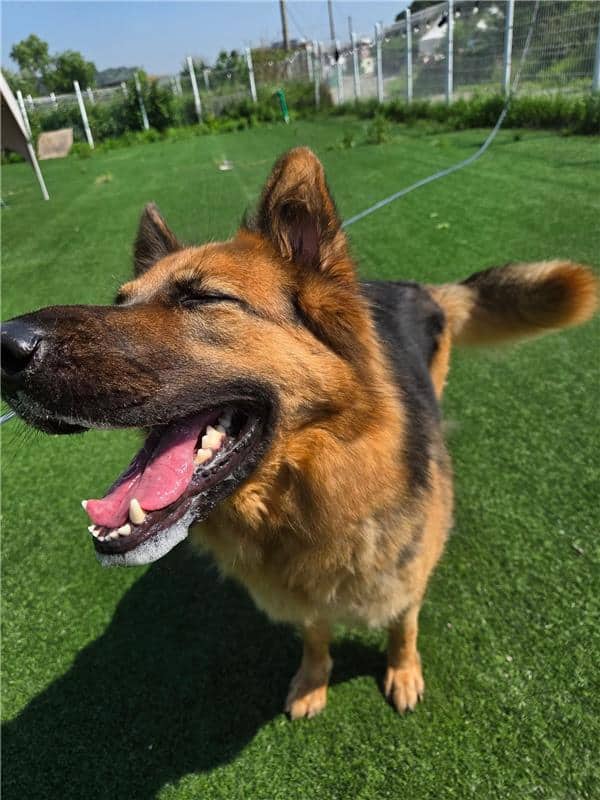
A happy Artemis enjoying playtime during her time in boarding.
What This Means If You’re Planning a Similar Move
If you’re relocating a dog from Thailand, or any country outside Australia’s lowest-risk groups, to Australia, the practical takeaway is this: start planning at least 7 months out, and build your timeline around the rabies titre test date, not the flight date.
A few things worth locking in early:
- Confirm your dog’s country classification with DAFF before assuming a timeline.
- Get the titre test blood draw scheduled as early as possible, since the 180-day clock starts there.
- Book your Mickleham quarantine slot the moment your import permit is approved. Waiting can cost you a delivery date.
- Expect an indirect flight routing.
Artemis’s move worked because every step was sequenced correctly the first time.
FAQ
How long does it take to move a dog from Thailand to Australia?
Around 7 to 8+ months from the start of pre-export requirements to final delivery, including a mandatory 10-day minimum quarantine stay after arrival.
Why can’t a dog fly directly from Thailand to Australia?
Dogs cannot be imported directly from Thailand to Australia because Thailand is not an approved export country. They must first relocate to an approved country, remain there for the required period, and complete Australia’s import requirements before entering Australia.
What is the Mickleham quarantine facility?
Mickleham is Australia’s government-run post-entry quarantine facility near Melbourne, where all imported dogs must stay for a minimum period, generally 10 days, before being released to their pet parents.
Why does the waiting period take 180 days?
Australia requires a rabies neutralizing antibody titre test (RNATT), and the dog cannot enter the country until at least 180 days have passed since the blood sample was processed. This confirms adequate rabies immunity and cannot be shortened.
Relocating a pet to Australia takes some planning. Request a free quote and we’ll map out the next steps with you.

Moving your pet across the world just got less stressful. Valerie Neyra, Marketing Coordinator at WorldCare Pet and devoted cat mom to Lucky, creates the guides, tools, and resources pet parents need to navigate domestic and international pet transport with confidence. Her mission? Making sure no pet owner feels alone during a global move.