
Published on October 2, 2026
Introduction
New World screwworm was eradicated from the U.S. back in 1966. Then, on June 3, 2026, USDA confirmed the first U.S. animal case of the current outbreak, and the parasite that had been moving north through Central America and Mexico was suddenly local news.
If you’re planning to travel or relocate with a dog or cat, especially to or from Mexico or Central America, screwworm now affects what paperwork you need, when your vet exams happen, and what border officials will check. Here’s what it is, what to watch for, and how to keep it from derailing your pet’s trip.
What is New World screwworm?
According to the USDA APHIS, New World screwworm (NWS) is a parasitic fly. The problem isn’t the adult fly, it’s the larvae. Female flies lay eggs in open wounds, and when the larvae (maggots) hatch, they burrow into living flesh and feed on it. That’s where the name comes from: they work their way in like a screw being driven into wood.
Unlike most fly larvae, screwworm larvae feed on healthy, living tissue, not dead tissue. Wounds get larger and deeper as more larvae hatch, and without treatment an infestation can be serious or even fatal.
NWS can infest any warm-blooded animal, including livestock, wildlife, birds, people, and yes, dogs and cats.
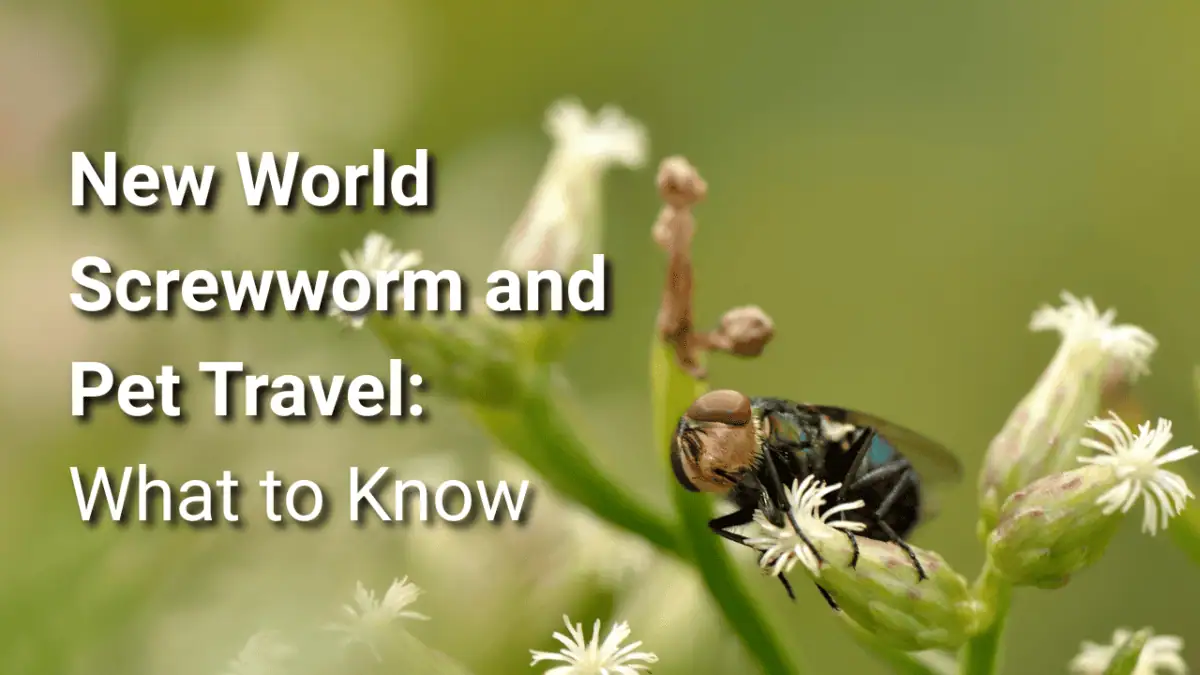
The adult fly is about the size of a housefly or a little bigger, with orange eyes, a metallic blue or green body, and three dark stripes down its back.
Where things stand right now
The United States eradicated screwworm in 1966 and stamped out a small outbreak in the Florida Keys in 2017. It’s still endemic in Cuba, the Dominican Republic, and parts of South America.
What’s changed is the northward spread. Since an outbreak was identified in Panama and Costa Rica in 2023, every country in Central America and Mexico has reported cases in animals, including pets, and in people.
On June 3, 2026, USDA confirmed the first U.S. animal case of the current outbreak. Texas and New Mexico now have designated NWS zones.
The CDC still rates the risk to people and animals in the U.S. as very low. But if you live in or travel to an area where the fly is active, your pet’s risk goes up.
The situation is moving quickly. For the latest U.S. detections, check USDA’s confirmed cases dashboard, along with the Texas and New Mexico state animal health sites for active zones.
Can dogs and cats get screwworm?
Yes. Screwworm mostly affects livestock, but dogs and cats can be infested too.
The fly lays eggs in wounds, but it doesn’t need a big one. Something as small as a tick bite can be enough, and recent surgical sites are a common target. It also targets body openings like the eyes, ears, nose, mouth, and genitals.
Signs to watch for in your pet:
- Maggots or white egg masses in a wound or body opening
- A foul smell, or the smell of decay
- Head shaking or irritated behavior
- Signs of pain: low energy, not eating, or hiding from people and other animals
If you notice any of these, call your veterinarian right away. Don’t try to pull the larvae out yourself.
How screwworm affects pet travel rules
If your pet’s route touches Mexico, Central America, or another affected country, screwworm now adds paperwork on both ends of the trip. Here’s what’s in place as of this writing.
| Trip | Pet | What’s required |
| U.S. to Mexico | Dogs | An NWS Inspection Certificate signed by a USDA-accredited vet no more than 5 days before entry (required since August 3, 2026). No APHIS endorsement needed. |
| U.S. to Mexico | Cats | No health certificate or NWS document. Cats are inspected at the border. |
| U.S. to Mexico | Ferrets | Not allowed. Mexico is blocking ferrets from all U.S. states. |
| Any NWS-affected country to the U.S. | Dogs | A health certificate signed by an official government vet in the departure country, confirming an NWS inspection within 5 days of travel and no infestation. This applies to U.S. dogs coming home, too. |
Sources: USDA APHIS, Pet Travel to Mexico; USDA APHIS traveler guidance
A few details worth knowing:
- Wounds matter at the border. Mexican inspectors check that dogs and cats have no fresh or healing wounds and no external parasites like ticks. If ticks are found, your pet can be held until lab results come back.
- Pack a clean carrier. Bedding, puppy pads, toys, and extra food in the carrier will be removed and destroyed. Only the food your pet needs for the day of arrival is allowed.
- Don’t add cats to the dog form. USDA warns this invalidates the document and can get your pets turned away.
- Re-entry can be denied. Pets showing signs of screwworm may be refused entry to the U.S. and sent back to the departure country at the owner’s expense.
These rules have changed several times in 2026, and they can change again with little notice. Always check the USDA pet travel page for your destination and the CDC dog import rules before you book.
How to protect your pet before, during, and after travel
Most of screwworm prevention comes down to two things: no open wounds, and fewer chances for flies to find your pet.
Before you go
- Talk to your vet about screwworm risk at your destination, and ask whether bringing your pet to an affected country is necessary.
- Book exams before and after the trip. For dogs, plan the timing around the 5-day inspection windows.
- Keep your pet on a vet-recommended tick and parasite preventive. USDA lists protection from ticks as a prevention step, since tick bites create the small wounds flies look for.
- If your pet has a scheduled procedure (spay, neuter, dental work), ask your vet whether to finish healing before travel.
- Find a vet at your destination ahead of time. The U.S. Embassy or consulate there can help point you to local options.
While you’re there
- Check your pet daily, especially the ears, eyes, nose, mouth, skin folds, armpits, under the tail, and genitals.
- Keep any scratch or wound clean and covered, no matter how small.
- Limit outdoor time in rural or livestock areas, and keep your pet indoors or in screened spaces when you can.
After you’re home
- Keep up the daily checks once you’re home. Screwworm eggs can hatch within 12 to 24 hours, so changes can show up fast.
- Get the post-trip exam on the calendar.
Moving within the U.S.? States are setting their own movement rules for animals leaving areas with active cases. If you’re moving from or through Texas or New Mexico, check the rules in both the state you’re leaving and the one you’re moving to.
What to do if you think your pet has screwworm
- Call your veterinarian right away and describe what you’re seeing.
- Don’t try to remove the larvae yourself. Your vet needs to remove them and treat the wound.
- Follow your vet’s treatment plan. No drugs are labeled specifically for screwworm, but the FDA has authorized some existing parasite medications for use.
Screwworm is a reportable disease, so your vet will notify state and federal animal health officials. You can also report a suspected case directly through USDA. Early reports help officials contain the fly before it spreads.
If you find larvae in a wound on yourself or a family member, contact a healthcare provider.
The bottom line
The risk to pets in the U.S. is still low. But if your pet is traveling to, from, or through Mexico, Central America, or an area with active cases, screwworm is now part of the plan. That means tighter timing on vet exams, new inspection paperwork, and a closer eye on every scratch.
The rules are changing quickly, and a missed document or a mistimed exam can mean a pet held at the border. If you’d rather not track every update yourself, our team keeps up with these requirements for every move we handle. Request a free quote and we’ll walk you through what your pet’s route needs.
For more on getting ready to fly, see our pet travel FAQ and ABCs of Pet Travel.
Sources
- USDA APHIS: New World Screwworm
- USDA APHIS: Confirmed Detections of New World Screwworm
- USDA APHIS: What You Need to Know Before Traveling Internationally with a Pet (PDF)
- USDA APHIS: Pet Travel From the United States to Mexico (updated September 21, 2026)
- CDC: New World Screwworm Outbreak (updated August 11, 2026)
- ASPCApro: NWS Safety for Animal Transport and Pet Travel (updated September 25, 2026)

Kaitlyn Reid is a Marketing Assistant at WorldCare Pet, where she helps share stories, tips, and guidance for smooth pet relocations worldwide. A devoted dog mom to Piper, she combines her love for animals with her marketing expertise to connect pet parents with the information they need for stress-free moves. Her goal is to make every transferee’s journey as seamless and reassuring as possible.