
Published on April 29, 2025
Last updated:
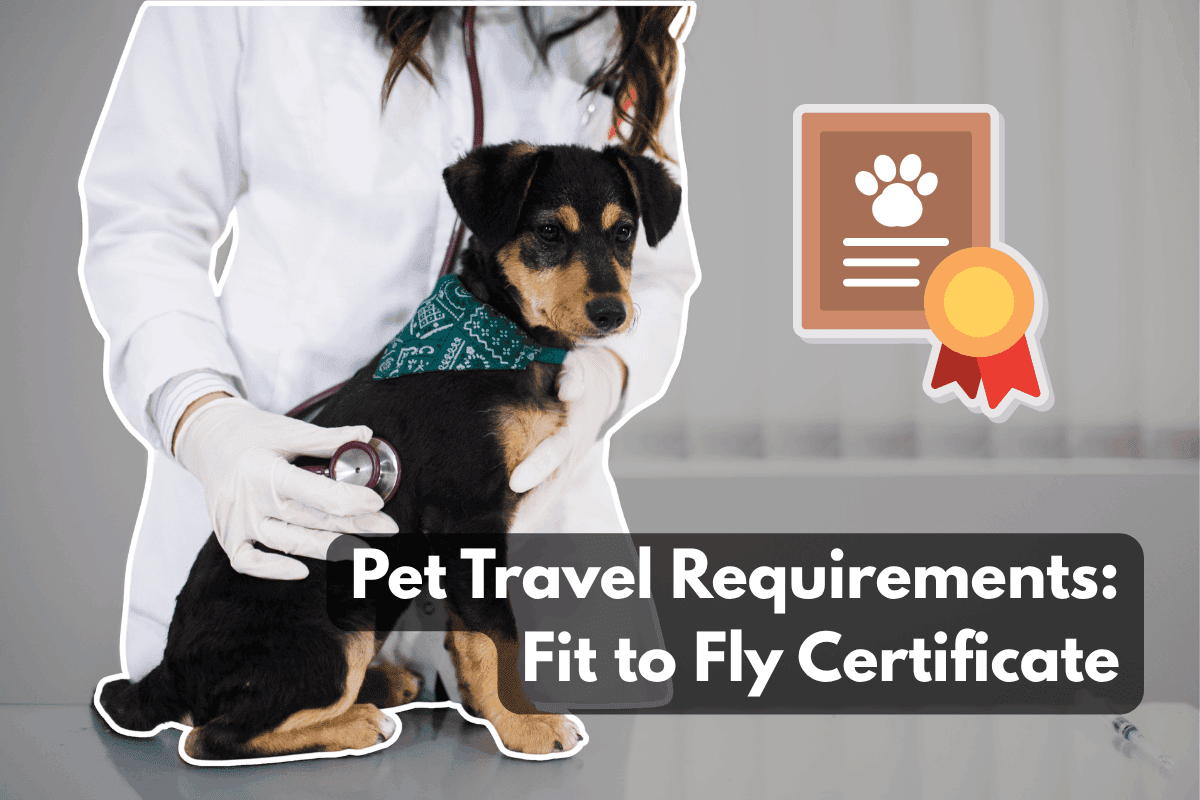
Before your pet boards a flight, someone has to confirm they’re ready for it. That’s the job of a fit-to-fly certificate. Here’s what the certificate is, when your pet needs one, what happens at the vet appointment, and how WorldCare Pet can help you prepare.
What Is a Fit-to-Fly Certificate for Pets?

A fit-to-fly certificate is a document issued by an accredited veterinarian confirming that your pet is healthy and safe to travel. Most airlines and international travel authorities require one to make sure your pet is fit for air travel. It may also be needed when crossing land borders.
Not every airline asks for a fit-to-fly certificate by name, but most request a general health certificate, which serves a similar purpose. Check the requirements of both your airline and your destination country before you travel.
A typical fit-to-fly certificate includes:
- Your pet’s name, age, and breed
- Vaccination records
- Microchip number
- A signed statement from the vet declaring your pet fit for travel
Is a Fit-to-Fly Certificate the Same as a Health Certificate?
No they are not the same, though people often use the terms interchangeably. A health certificate confirms that your pet meets the entry requirements of the destination, including vaccinations, parasite treatments, and microchip details. A fit-to-fly certificate focuses on whether your pet is healthy enough for air travel.
When Should My Pet Get a Fit-to-Fly Certificate?
Timing matters. Most airlines require the certificate to be issued within 10 days of travel, but some count from arrival instead of departure, and some destinations set a shorter window. China, for example, requires the certificate within 7 to 10 days of departure, and requirements for the UK and Italy have their own timelines.
If your pet’s flight date changes, the certificate may need to be reissued. So it’s best to book the vet appointment only once travel dates are confirmed.
What Happens at the Fit-to-Fly Vet Appointment?
The appointment usually needs to be with a government-accredited veterinarian who examines your pet and completes the required paperwork. During the visit, your vet will usually:
- Do a physical exam to confirm your pet is healthy enough to travel
- Scan your pet’s microchip and record the number on the certificate
- Review vaccination records, including the date of the current rabies vaccine
- Give any vaccines, tests, or treatments your destination requires
- Sign and date the certificate
Details like the microchip number and rabies vaccine dates must match across every document, so it’s worth double-checking them before you leave the appointment. Bring your travel dates, your pet’s vaccination history, and any forms your airline or destination has provided. If you work with WorldCare Pet, our team can assist with all of this.
Do Some Pets Need Additional Paperwork to Fly?
Some do. Depending on the airline, route, and time of year, your vet may need to provide:
- An acclimation certificate stating your pet can handle temperatures outside the airline’s standard range
- Breed-specific approval for snub-nosed breeds like Pugs, Bulldogs, and Persian cats. Many airlines restrict these breeds or add extra requirements, such as a larger crate, because their shorter airways make air travel harder on them.
- Age confirmation, since most airlines set a minimum age for pets traveling by air
Pregnant pets, pets recovering from surgery, and pets with chronic conditions may also need a more detailed vet assessment before an airline accepts them.
Can My Pet Be Sedated for the Flight?
Most airlines and veterinary organizations advise against sedating pets for air travel, since sedatives can affect breathing and balance at altitude. If your pet gets anxious, ask your vet about crate training and other ways to keep them comfortable before the trip.
Need Help Getting a Fit-to-Fly Certificate?
Navigating travel paperwork can be confusing. We get it. WorldCare Pet is here to help you understand the process and guide you every step of the way.

Moving your pet across the world just got less stressful. Valerie Neyra, Marketing Coordinator at WorldCare Pet and devoted cat mom to Lucky, creates the guides, tools, and resources pet parents need to navigate domestic and international pet transport with confidence. Her mission? Making sure no pet owner feels alone during a global move.