
Published on March 6, 2026
Last updated:
Planning a move to Singapore with a pet? One of the most important things to confirm before you book travel is whether your pet is allowed into the country and allowed in your future home.
In Singapore, pet rules do not stop at import requirements. You also need to check housing rules. A dog may be allowed into Singapore under AVS rules, but still not be allowed in an HDB flat. Likewise, private condos may set their own by-laws on pet keeping, nuisance, and use of shared spaces.
For many pet owners, the biggest questions are simple:
- Can my breed enter Singapore?
- Can I keep this pet in an HDB flat?
- Do condo rules override general pet ownership rules?
This guide answers those questions clearly.
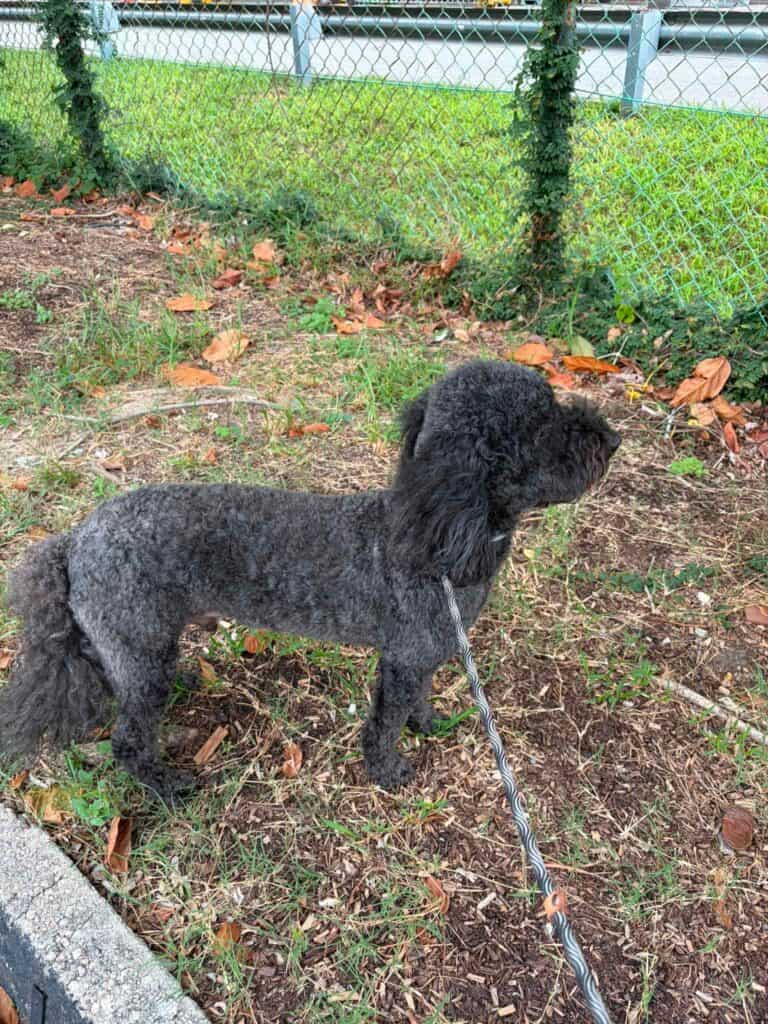
Zac, settling in after arriving in Singapore.
Can you bring any dog breed into Singapore?
No. Some dog breeds are not allowed to be imported into Singapore at all.
According to Singapore’s Animal & Veterinary Service (AVS), the following dog breeds are not allowed into Singapore for sale, temporary visit, or permanent stay: Pit Bull types, Akita, Neapolitan Mastiff, Tosa, Dogo Argentino, Fila Brasileiro, Boerboel, Perro de Presa Canario, and crosses of those breeds. AVS states that these Specified Dogs, unless already licensed under older rules, are currently not allowed into Singapore.
That means breed checking should happen early in your planning process. If your dog falls within one of these prohibited categories, the move may not be possible under current Singapore import rules.
What are “Specified Dogs” in Singapore?
Singapore separates certain dogs into a category called Specified Dogs. These breeds are subject to added licensing and control requirements because AVS classifies them as potentially more aggressive.
AVS lists the following as Specified Dogs:
Part 1 Specified Dogs
- Pit Bull types, including American Pit Bull Terrier, American Staffordshire Terrier, Staffordshire Bull Terrier, American Bulldog, and crosses
- Akita
- Neapolitan Mastiff
- Tosa
- Dogo Argentino
- Fila Brasileiro
- Boerboel
- Perro de Presa Canario
- Crosses of the above breeds
Part 2 Specified Dogs
- Bull Terrier
- Doberman Pinscher
- Rottweiler
- German Shepherd Dog and related breeds such as Belgian Shepherd Dog and East European Shepherd Dog
- Mastiffs, including Bull Mastiff, Cane Corso, and Dogue de Bordeaux
- Crosses of those breeds
This distinction matters because some Part 1 dogs are banned from import, while other Specified Dogs may be allowed only under stricter licensing conditions, especially in private housing.
What extra rules apply to Specified Dogs?
AVS says Specified Dogs are subject to additional licensing conditions. Depending on the category, those rules can include muzzling in public, leashing, sterilisation, insurance coverage, banker’s guarantee requirements, and training obligations. AVS also states that non-compliance can lead to fines of up to S$5,000.
For pet owners, “allowed” does not always mean “simple.” Even when a breed is not fully banned, ownership may come with more legal responsibilities than a non-Specified breed.
Are restricted dogs allowed in HDB flats?
No. AVS states that for HDB property, no dog of any breed in the list of Specified Dogs is allowed under the Housing and Development (Animals) Rules 2024.
That is one of the most important housing rules to understand before relocating to Singapore. Even if a dog may be licensable on private premises, that does not mean it can live in public housing.
How many pets are allowed in an HDB flat?
Under AVS’s current limits of ownership, an HDB flat can keep a maximum of 2 cats and 1 dog of an approved small breed. AVS also notes that non-compliance with HDB’s Rules can lead to a fine of up to S$4,000.
This is a major update many pet owners still miss. Cats are now allowed in HDB flats within the current framework, but there are still numerical limits and licensing expectations.
What dogs are allowed in HDB flats?
HDB allows only 1 dog from its approved small-breed list in each flat. HDB’s published guidance identifies this as the approved breed list for HDB flats.
HDB flats do not allow large dogs generally. They allow only one dog, and that dog must be on HDB’s approved small-breed list.
What are the pet rules for private housing in Singapore?
For private, non-HDB residential premises, AVS states that a maximum of 3 cats or dogs, or a combination of both, may be kept in one unit. Out of those three, only one Specified Dog may be licensed and kept.
This makes private housing more flexible than HDB, but it is not unlimited. Breed restrictions, licensing rules, and property-specific by-laws can still affect whether your pet arrangement is workable.
Do condo by-laws matter in Singapore?
Yes. Condo rules matter a lot.
Singapore’s Building and Construction Authority explains that the Management Corporation can make by-laws about the keeping of pets, as long as those by-laws do not conflict with Singapore law. BCA also notes that by-laws may regulate pet keeping, common property use, noise, and behaviour.
There is also a prescribed by-law stating that an owner or occupier must not keep any animal on the lot or common property if it may cause annoyance to other residents.
So even if AVS allows your dog in private housing, your condo may still have practical pet restrictions tied to nuisance, common areas, elevators, leash use, or estate-specific by-laws.
Are there cat breed restrictions in Singapore?
Most cat breeds are allowed in Singapore, but AVS says first to fourth generation Bengal or Savannah cat crosses are not allowed unless you can prove the cat is at least a fifth-generation cross from the ancestral wild stock. AVS also states that most breeds of cats are allowed to be kept as pets in Singapore except those early-generation Bengal or Savannah crosses.
This matters for both import planning and housing compliance. If your cat has hybrid ancestry, you should confirm the generation documentation before moving forward.
What else should pet owners check before moving to Singapore?
Breed and housing are only part of the process.
AVS also requires pet owners to check the exporting country’s rabies risk category and follow the matching veterinary conditions. For Schedule II and III countries, this can include rabies vaccination, rabies serology timing, and core vaccination requirements. The AVS import page also warns that these country categorizations can change, so owners should re-check closer to import.
In other words, a pet moving to Singapore must usually pass three rules:
- The pet must be an allowed breed.
- The pet must be allowed in the intended residence type.
- The pet must meet Singapore’s import and veterinary requirements.
Quick summary: Singapore restricted breeds and housing rules
Here is the simplest way to think about it:
- Some dog breeds are banned from import into Singapore entirely.
- Specified Dogs face stricter licensing and control rules.
- HDB flats allow up to 2 cats and 1 approved small-breed dog only.
- No Specified Dog is allowed in HDB property.
- Private housing allows up to 3 cats/dogs total, with only 1 Specified Dog allowed.
- Condos may enforce additional pet by-laws.
Final thoughts
If you are planning to move a pet to Singapore, do not assume that airline approval or import eligibility is enough. Housing rules can be just as important as veterinary paperwork.
The safest approach is to confirm your pet’s breed status, verify whether your future residence is HDB or private housing, and review any condo or MCST by-laws before you commit to a move. Singapore’s pet framework is manageable, but it is detailed, and small mistakes can create major delays.

Moving your pet across the world just got less stressful. Valerie Neyra, Marketing Coordinator at WorldCare Pet and devoted cat mom to Lucky, creates the guides, tools, and resources pet parents need to navigate domestic and international pet transport with confidence. Her mission? Making sure no pet owner feels alone during a global move.