

Published on September 18, 2026
Last updated:
Japan is rabies-free, and it intends to stay that way. That single fact shapes almost everything about moving a pet there: the microchip timing, the two-dose vaccine schedule, the blood test, and the 181-day wait that catches almost every first-time pet parent off guard. The good news is that none of it is complicated once you see the whole timeline in order, and the process is nearly identical for dogs and cats. This guide walks through the shared timeline first, then covers the few points where dog and cat requirements differ.

Luna hanging out with her buddies before her relocation to Japan.
How long does it take to move a pet from the USA to Japan?
Plan for 6 to 8 months from the day you start to the day your pet boards a flight. The timeline isn’t flexible: Japan’s Animal Quarantine Service (AQS) ties the 181-day waiting period to a specific blood draw date, and there’s no way to compress it. Pet parents who start the process the same month they book a flight are the ones who end up with a pet in quarantine on arrival, so this is the one guide where starting early matters more than anything else.
What are Japan’s pet import requirements for dogs and cats?
The core requirements are the same for both species:
- ISO-compliant microchip (ISO 11784/11785 standard, 15-digit), implanted before the first rabies vaccination. Your vet must scan the microchip at every appointment, and you’ll need to provide proof of the implantation date.
- Two rabies vaccinations, given at least 31 days apart, both administered after the microchip was implanted and with the pet at least 91 days old at the time of the first dose.
- Rabies antibody titer test at a MAFF-designated laboratory, with a result of 0.5 IU/ml or higher. For pets tested in the US, the primary civilian-accessible lab is Kansas State University’s Rabies Laboratory.
- 181-day waiting period, counted from the date of the blood draw, not the test result date and not the vaccination date.
- Advance Notification submitted to AQS at least 40 days before arrival.
- Import Quarantine Certificate presented on arrival after your pet is physically checked.
- Note: Dogs can only enter Japan through designated airports, such as Narita International Airport. If you need assistance with your dog’s move, request an obligation-free quote at WorldCare Pet Transport.
Meet every requirement on time, and inspection at the airport typically takes a matter of 4-6 hours. Miss one, and the pet is held at an AQS facility for the remainder of the 181 days, at the owner’s expense.
Is the process different for dogs than for cats?
Mostly no. Dogs and cats follow the same microchip, vaccination, titer, and 181-day sequence. The differences are smaller than most pet parents expect:
What’s different for dogs moving to Japan
- A pre-export health check within 10 days of departure must confirm the dog shows no clinical signs of leptospirosis. Cats don’t require this leptospirosis check. The pre-export exam for cats only needs to confirm they show no clinical signs of rabies.
- Beyond the mandatory rabies protocol, vaccinations such as DHPP and leptospirosis are commonly recommended before travel.
- Dogs must be registered with the local municipality within 30 days of arrival in Japan. This is a legal requirement, not a suggestion.
What’s different for cats moving to Japan
- No leptospirosis health check requirement.
- FVRCP is the commonly recommended core vaccination alongside the mandatory rabies protocol.
- No municipal registration requirement after arrival.
None of these differences change the core timeline, so a household moving a dog and a cat together can plan around one shared schedule rather than two separate ones.
What is Japan’s 181-day rabies waiting period, exactly?
The clock starts on the day blood is drawn for the titer test, called Day 0. Your pet can’t enter Japan before Day 181, and arriving even a day early means quarantine at an AQS facility for whatever days remain. The titer result itself stays valid for two years from the blood draw, as long as the rabies vaccination’s effective period stays unbroken the entire time. If a booster lapses at any point during the wait or afterward, it’s treated as a new primary vaccination, and the titer test and 181-day wait start over from zero.
Because of that reset risk, it’s worth mapping three dates at the very start of planning: when the current vaccine’s effective period ends, the blood draw date, and the target arrival window. A booster scheduled a few weeks too late can undo months of preparation.
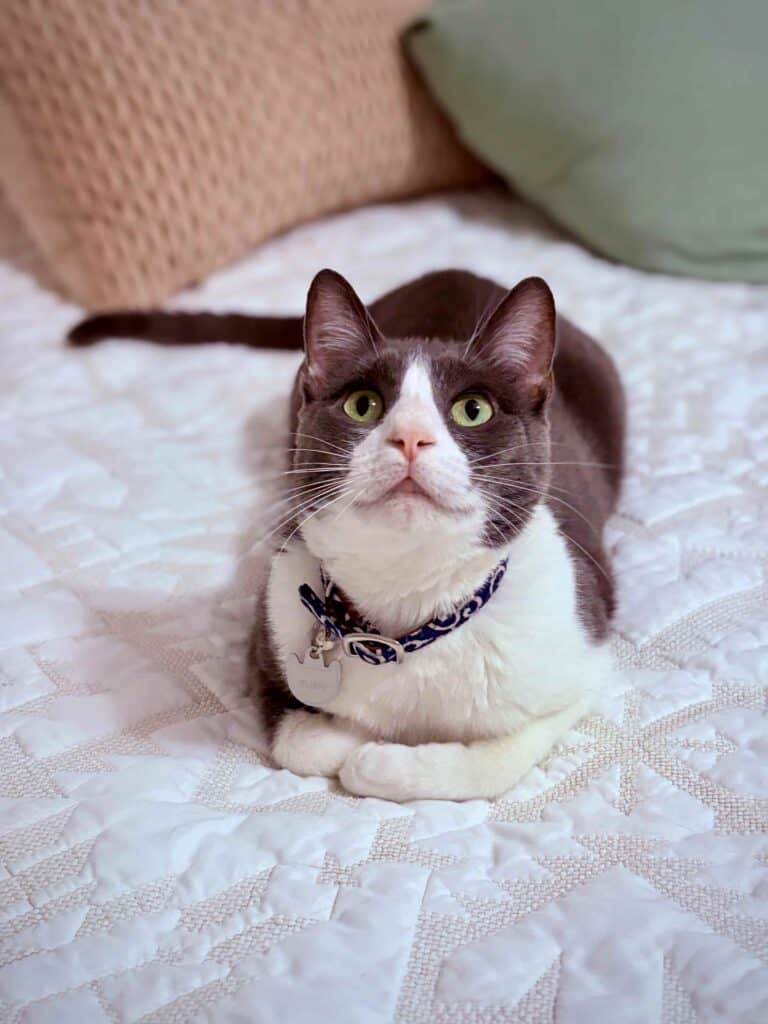
Sushi patiently waiting for her flight to Japan.
What documents do I need to bring my dog or cat to Japan?
- Original Japan Health Certificate endorsed by the USDA
- Original Rabies Antibody Titer Test result from the MAFF-approved laboratory
- Two (2) Original Rabies Vaccination Certificates
- General Vaccination Certificates
- Microchip Certificate
- AQS Advance Notification confirmation
Can any dog or cat breed fly to Japan?
MAFF itself doesn’t restrict breeds. Airlines do. Brachycephalic, or snub-nosed, breeds face summer embargoes or year-round bans on many carriers because of the added respiratory risk during flight. This applies to short-nosed dog breeds like bulldogs, pugs, and boxers, and to short-nosed cat breeds like Persians. Airline pet policies also change by season and by carrier, so this is worth confirming against the specific airline before booking rather than assuming last year’s policy still applies.
This section isn’t meant to scare you. But it’s important to stay flexible with your relocation dates, since embargoes can shift and your pet could be denied boarding on a given flight with little notice.
How much does it cost to move a pet to Japan?
Costs vary by pet size, airline, and how much of the process is coordinated for you, so there’s no single number that applies to every move. To be transparent, a USA-to-Japan move typically costs thousands of dollars. That reflects the level of hands-on service and coordination we provide, which is really what sets us apart in this space. Our Pet Relocation Counselors can walk you through the specific factors for your pet and timeline, and put together a quote based on your situation. Contact us today.
What’s the most common mistake pet parents make with a USA to Japan move?
- Starting too late. The 181-day wait alone requires six months, before accounting for vaccination spacing and appointment scheduling.
- Missing the 31-day gap between rabies vaccinations. Many US pets arrive at this process with only one rabies shot on file.
- Letting the vaccine’s effective period lapse during the wait. This resets the titer test and the full 181 days.
- Submitting Advance Notification late. AQS requires it at least 40 days before arrival; late submission means denied entry or quarantine on arrival regardless of how well everything else was prepared.
Should I use a pet relocation company for a USA to Japan move?
Given how unforgiving the 181-day rule is to a single missed date, most pet parents find it’s worth having someone track the microchip, vaccination, titer, and notification deadlines alongside them rather than managing six separate dates on their own. WorldCare Pet Transport guides pet parents through the full USA to Japan timeline for both dogs and cats, coordinating the pieces of the process so nothing slips past its window. Talk to a member of our team about your timeline and what it looks like for your pet. Request a free quote today.

Moving your pet across the world just got less stressful. Valerie Neyra, Marketing Coordinator at WorldCare Pet and devoted cat mom to Lucky, creates the guides, tools, and resources pet parents need to navigate domestic and international pet transport with confidence. Her mission? Making sure no pet owner feels alone during a global move.