

Published on October 22, 2026
Last updated:
The UK to Australia is one of the more involved pet relocations out there. It takes time and careful planning, but plenty of pets make the trip every year. Australia is rabies-free and protects that status carefully, so the process runs on a fixed sequence of vet visits, blood tests, permits and a short stay in government quarantine. The good news is that the sequence is predictable. Once you know the order, the months of preparation start to feel less like a mystery and more like a calendar.
WorldCare Pet Transport has been relocating pets internationally for more than 25 years, including many UK to Australia moves for families and the corporate relocation teams who support them. This guide walks through each step for both cats and dogs, in the order it actually happens.
DAFF publishes the full requirements in its step-by-step guides for dogs and cats.
Key Takeaways
- The UK is a Group 3 approved country for pet imports into Australia.
- Plan for roughly seven to ten months from first vet visit to arrival, mostly because of a 180-day wait after the rabies antibody (RNATT) blood test.
- Every cat and dog needs a microchip, rabies vaccination, a passing RNATT result, an Australian import permit and pre-export vet checks.
- Dogs need additional blood tests, including Brucella canis, Leptospira, Brucella canis and Leishmania.
- All pets complete a minimum 10-day stay at the Mickleham post-entry quarantine facility in Melbourne.
- Pets fly as manifest cargo into Melbourne, in an airline-approved crate.
- Several dog breeds and hybrid cats are not permitted, including Bengal cats as of 1 March 2026.
Can You Bring a Cat or Dog From the UK to Australia?
Yes. The UK is on Australia’s list of approved countries for cat and dog imports, classified as Group 3, which covers countries where rabies is absent or well controlled. Pets from Group 3 countries can enter Australia after completing a set preparation process in an approved country and a short stay in post-entry quarantine.
All preparation must be carried out by a government approved veterinarian in an approved country. In the UK, final export paperwork is endorsed by an Official Veterinarian working with the Animal and Plant Health Agency (APHA).
How Long Does It Take to Move a Pet From the UK to Australia?
Most UK to Australia pet moves take seven to ten months from the first vet appointment to arrival in Melbourne. The longest single part is a 180-day waiting period that begins on the day the rabies antibody blood sample arrives at the laboratory. Starting early is the single most useful thing a family can do.
A realistic timeline looks like this:
The 180 days is not quarantine. Your pet lives at home with you, or with someone else in an approved country, while the clock runs.
What Are the Steps to Import a Pet From the UK to Australia?
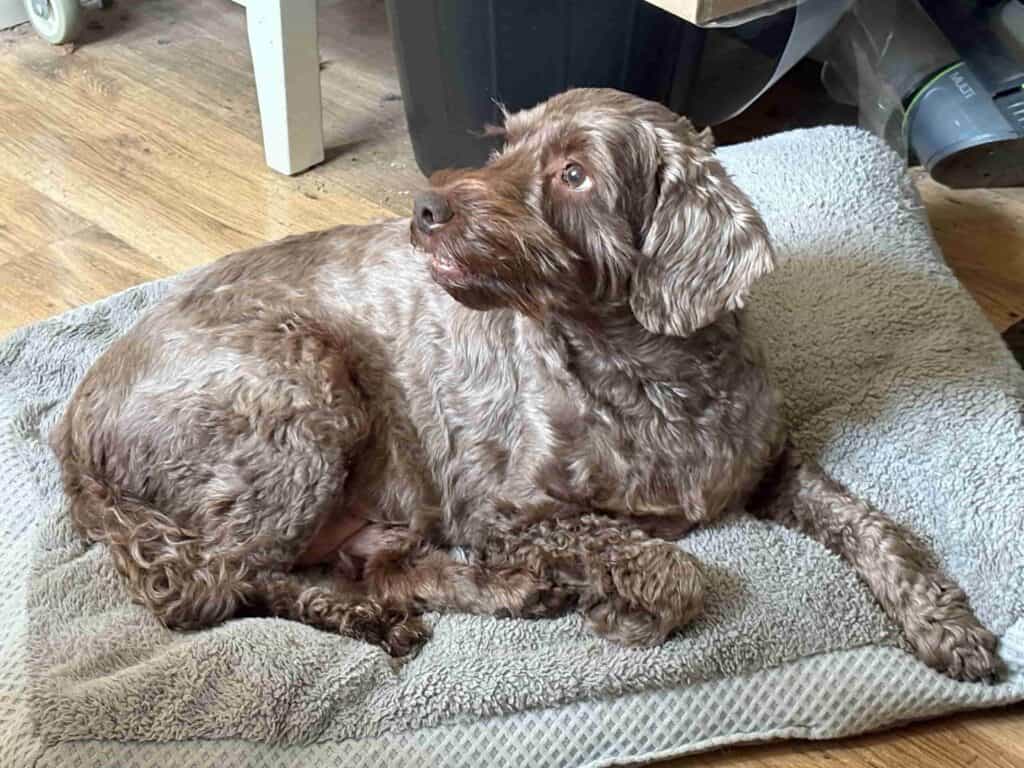
Jabba the Pup, Ivan’s travel companion on the move from the UK to Australia.
The import process follows a fixed order: microchip, rabies vaccination, RNATT blood test, the 180-day wait, import permit, quarantine booking, pre-export tests and treatments, then the flight. Each step has its own timing rule, and several depend on the one before. The sections below explain what each step is and why it exists.
Does My Pet Need a Microchip to Enter Australia?
Yes. Every cat and dog must have a microchip that can be read by a standard scanner, implanted before the most recent rabies vaccination and before the RNATT blood sample is taken. The microchip number links your pet to every test result, certificate and permit, so it is scanned and recorded at each vet visit along the way.
When Should My Pet Get a Rabies Vaccination?
Your pet needs a current rabies vaccination given when it was at least 84 days old, and the vaccination must stay valid through export. The vaccine comes before the RNATT blood test, because the test measures the antibodies the vaccine produces.
What Is the RNATT Test, and Why Is There a 180-Day Wait?
The RNATT, or Rabies Neutralising Antibody Titre test, is a blood test that confirms your pet has responded to the rabies vaccine. The sample is collected by a government-approved vet and tested at a laboratory recognised by the competent authority in the country of export, which for this move is the UK. To pass, the result must be at least 0.5 IU/mL.
After a passing result, an official government veterinarian, through APHA in the UK, completes the RNATT declaration required by Australia. Pets must then wait at least 180 days from the date the blood sample arrived at the lab before they can travel. This isn’t quarantine, and pets stay at home during this time. It’s an observation period, long enough for signs of rabies to appear if a pet was exposed before the test.
How Do You Get an Australian Import Permit for a Cat or Dog?
An import permit is a document issued by Australia’s Department of Agriculture, Fisheries and Forestry (DAFF) that authorises a specific pet to enter the country. Applications are lodged through DAFF’s BICON system once the RNATT result and declaration are in hand. DAFF aims to process applications within 20 to 40 business days, though it can take longer in busy periods.
Once the permit is issued, space can be requested at the Mickleham quarantine facility. Quarantine availability is limited and books out in peak seasons, which is one more reason to start early.
What Vet Checks and Parasite Treatments Are Needed Before Departure?
In the weeks before the flight, every pet receives internal and external parasite treatments within set windows and a final clinical examination by a government approved vet. Internal parasite treatments cover nematodes and cestodes, and external treatments cover fleas and ticks.
The pre-export exam confirms your pet is healthy and fit to fly, and it takes place in the last few days before departure. The completed export health certificate is then endorsed by an Official Veterinarian.
What Extra Tests Do Dogs Need to Enter Australia?
Dogs travelling from the UK need several blood tests that cats do not, for diseases found in dogs elsewhere but not established in Australia. These are Brucella canis, Leptospira, and Leishmania, each collected within a set number of days before export. The tests sit in the final weeks of the timeline, so they are scheduled backwards from the flight date.
- Brucella canis: a bacterial infection that affects the reproductive system. A negative blood test is required for entire dogs; dogs with documented desexing may be exempt.
- Leptospira (serovar Canicola): a bacterial disease spread through urine. DAFF requires a negative blood test.
- Leishmania infantum: a parasite spread by sandflies. A negative blood test is required within the pre-export window.
If a result comes back positive or inconclusive, DAFF advises on the next steps for your dog, which may include further testing. Your WorldCare Pet Relocation Counselor plans the testing calendar with room to spare, so there is time to act on DAFF’s advice without starting the process over.
Are the Requirements Different for Cats?

Ivan, who traveled from the UK to Australia with his sibling Jabba the Pup.
Cats follow the same core path as dogs: microchip, rabies vaccination, RNATT test, 180-day wait, import permit, parasite treatments, vet exam and quarantine. Cats do not need the dog-specific disease tests, which tends to make the final weeks simpler.
The main cat-specific consideration is breed. Australia does not permit certain Non-domestic and wild cat hybrids, and that list changed in 2026 (see below). Cats also tend to appreciate extra time getting used to their travel crate, which we cover in the flight section.
Which Dog and Cat Breeds Are Banned From Australia?
Australia prohibits several dog breeds, wolf hybrids and cat hybrids, regardless of where they travel from. These pets cannot be imported, including crosses of the listed breeds.
Dogs not permitted:
- Dogo Argentino
- Fila Brasileiro
- Japanese Tosa
- American Pit Bull Terrier and Pit Bull Terrier
- Perro de Presa Canario (Presa Canario)
- Wolf-dog hybrids, including Czechoslovakian Wolfdog, Saarloos Wolfdog and Lupo Italiano
Cats not permitted:
- Savannah
- Safari
- Chausie
- Bengal, as of 1 March 2026
The Bengal change is recent. If your cat is a Bengal or a Bengal cross, it is worth raising at the very first conversation so planning can account for it. Some Australian states and local councils also have their own rules for certain breeds and crossbreeds after arrival, along with standard council registration for all dogs.
Is There an Age Limit for Pets Moving to Australia?
There is no fixed maximum age, but there is a practical minimum. The rabies vaccine can be given from 12 weeks (84 days) of age, the RNATT blood sample is usually taken three to four weeks later, and the 180-day wait follows the test. That means most pets are around nine to ten months old at the earliest when they travel.
DAFF does not recommend importing pets that are very old or unwell, and pets in later stages of pregnancy or nursing young cannot travel. For senior pets, a conversation with your vet about fitness to fly is a sensible early step.
How Long Is Pet Quarantine in Australia?
Cats and dogs arriving from the UK spend a minimum of 10 days at the Mickleham post-entry quarantine (PEQ) facility in Melbourne, Victoria. Mickleham is Australia’s only government quarantine facility for imported cats and dogs, run by DAFF. A stay can run longer if a pet needs further checks or treatment on arrival.
During quarantine, staff monitor each pet’s health, check for parasites and confirm paperwork matches the animal. Pets are housed individually. If you are bringing more than one pet of the same species, such as two dogs, DAFF will try to place them in neighbouring pens where possible. Visiting is not generally available, so most families plan to settle into their new home while their pet completes its stay.
Quarantine fees are charged by DAFF and scale with the length of stay and number of pets. Your WorldCare Pet Relocation Counselor can assist with the quarantine planning.
How Do Pets Fly From the UK to Australia?
Cats and dogs must fly to Australia as manifest cargo and arrive at Melbourne Airport, where they transfer directly to Mickleham. Manifest cargo means the pet travels on an air waybill in a temperature-controlled, pressurised hold, handled by trained airline cargo staff. Pets cannot enter Australia as checked baggage from the UK.
The route matters as much as the airline. Pets travel as manifest cargo and must fly directly into Melbourne, with no domestic connections within Australia. Any stopover along the way needs to be approved for transit, and pets stay on the international side of the airport throughout. Seasonal temperature limits and airline restrictions for snub-nosed breeds can also affect which routings are possible.
What Kind of Crate Does My Pet Need?
Your pet needs a sturdy, well-ventilated crate that meets IATA Live Animals Regulations and the airline’s own rules. The crate must be large enough for your pet to stand without its head touching the top, turn around and lie down in a natural position.
Crate training is the part of the move that rewards patience. Starting a few weeks before travel, leaving the crate open at home with familiar bedding and the occasional treat inside helps it become an ordinary piece of furniture rather than a surprise on travel day. Cats in particular tend to do well when the crate has been around long enough to be ignored. For more ideas, see How to Reduce Your Pet’s Travel Carrier Anxiety.
What Does WorldCare Handle on a UK to Australia Pet Move?
WorldCare manages the full door-to-door relocation, from the first vet appointment in the UK to your pet’s arrival at your new home in Australia. A dedicated Senior Pet Relocation Counselor builds the timeline, schedules every step in the right order and keeps the family updated as each milestone is completed.
On a typical UK to Australia move, WorldCare Pet coordinates:
- A personalised preparation timeline built backwards from your target travel window
- Scheduling of microchip checks, rabies vaccination, RNATT testing and the dog-specific blood tests with government approved vets
- The import permit application and Mickleham quarantine reservation
- A detailed timeline covering parasite treatments, the pre-export vet exam, and APHA endorsement of the export health certificate
- An IATA-compliant crate sized to your pet
- Home collection in the UK and ground transport to the airport
- Flight planning on approved routings as manifest cargo into Melbourne
- Customs and biosecurity clearance on arrival
- Collection from Mickleham after release and onward delivery, including domestic connections to other Australian cities
Flights and quarantine space depend on airline and DAFF availability, so WorldCare Pet plans around those windows and keeps the family informed if anything shifts.
How Can Relocation Teams Plan Around a Pet Move to Australia?
For relocation management companies and global mobility teams, the best time to mention the pet is when the assignment is approved. Earlier planning keeps more options open. A seven to ten month preparation window rarely lines up neatly with a start date, so knowing about the pet up front helps everyone plan.
A few practical considerations for corporate partners:
- Timing: if the employee’s move date is fixed and close, the pet may need to follow later, or a family member may stay behind for a period. Building that into the assignment plan avoids last-minute decisions.
- Temporary housing: pets go into quarantine for at least 10 days on arrival, so they join the family later than the move-in date. Planning temporary accommodation that allows pets from the expected release date makes that handover smoother.
- Budgeting: costs vary with the number of pets, pet size (which drives crate size and airfare), routing, and Australian government fees for the import permit and quarantine stay, which are charged per pet. With its testing schedule and mandatory quarantine, Australia sits toward the more involved end of international pet moves, and WorldCare Pet can provide an itemised quote during planning.
- One point of contact: WorldCare’s Pet Relocation Counselor keeps both the family and the relocation team updated, so mobility teams are not left translating vet appointments into assignment timelines.
To see how WorldCare Pet works with HR, RMC, and global mobility teams, visit our Corporate Pet Relocation Services page.
Frequently Asked Questions About Moving Pets From the UK to Australia
Do pets from the UK have to go into quarantine in Australia?
Yes. Cats and dogs from the UK complete a minimum 10-day stay at the Mickleham post-entry quarantine facility in Melbourne. The 10-day minimum depends on an identity check by two DAFF-approved Official Veterinarians before the RNATT blood sample is taken; without it, the minimum stay is 30 days. Beyond that, longer stays apply only if extra checks or treatment are needed on arrival.
How far in advance should I start preparing my pet for Australia?
Start at least seven to ten months before your intended travel date. The 180-day wait after the RNATT blood test is the main reason the process takes this long.
Can my pet fly into Sydney, Brisbane or Perth?
No. Cats and dogs from the UK must arrive in Melbourne as manifest cargo so they can transfer to Mickleham. After release, pets can travel onward to other Australian cities.
What is the RNATT test for pets going to Australia?
The RNATT test is a blood test that measures rabies antibodies after vaccination. The result must be at least 0.5 IU/mL, and the 180-day wait starts on the day the sample arrives at the lab.
Does my dog need different tests than my cat?
Yes. Dogs need additional blood tests for Brucella canis, Leptospira, and Leishmania before export. Cats follow the core process without these tests.
Are Bengal cats allowed into Australia?
No. As of 1 March 2026, Bengal cats are no longer permitted to enter Australia. Savannah, Safari and Chausie cats are also prohibited.
How much does it cost to move a pet from the UK to Australia?
Costs depend on the number and size of pets, the flight routing, vet testing and the length of quarantine. Australia is one of the more involved destinations, and WorldCare Pet provides an itemised quote once your pet’s details and timeline are known.
Can my pet travel in the cabin to Australia?
No. Cats and dogs from the UK must enter Australia as manifest cargo. This is how every WorldCare Pet UK to Australia move is planned.
Ready to Plan Your Pet’s Move to Australia?
Australia asks for patience, and the reward is a pet who arrives settled, cleared and ready to explore a new home. WorldCare’s Pet Relocation Counselors have been guiding families and relocation teams through this process for more than 25 years, one vet visit and one milestone at a time.
If a move to Australia is on your horizon, request a quote and a counselor will talk through your pet’s timeline with you. Let us be the heart of your move.

Moving your pet across the world just got less stressful. Valerie Neyra, Marketing Coordinator at WorldCare Pet and devoted cat mom to Lucky, creates the guides, tools, and resources pet parents need to navigate domestic and international pet transport with confidence. Her mission? Making sure no pet owner feels alone during a global move.