

Published on August 12, 2025
Last updated:
If you’re planning an international move with your pet, you may have heard the term pet quarantine. While it might sound stressful, it’s simply a precaution some countries use to keep animals, and people, safe from disease.
With global pet travel on the rise, it’s more important than ever for pet parents to understand the rules. According to Condor Ferries’ Pet Travel Statistics, 37% of families now travel with their pets, a 19% increase over the past decade. In the U.S. alone, an estimated 2 million pets fly each year commercially.
In this guide, we’ll cover:
- What pet quarantine is and why it’s required
- Countries with the strictest quarantine rules in 2026
- How to prepare your pet for quarantine
- Tips to avoid travel delays
What is Pet Quarantine?
Pet quarantine means your pet is kept in a designated facility upon arrival in a new country. They are monitored for a set time to ensure they are free from diseases, especially rabies. Quarantine is most common for dogs and cats, but some countries apply it to other animals too.
Why Countries Require Quarantine
- Disease Prevention: Stops the spread of rabies and other contagious illnesses
- Biosecurity: Protects native wildlife and ecosystems
- Public Safety: Keeps both people and animals healthy
Typical quarantine process:
- Duration: Can range from 12 hours to 4+ months
- Location: Official quarantine facility or approved home confinement
- Checks: Veterinary exams, vaccinations, and parasite treatments
Countries That Require Pet Quarantine in 2026
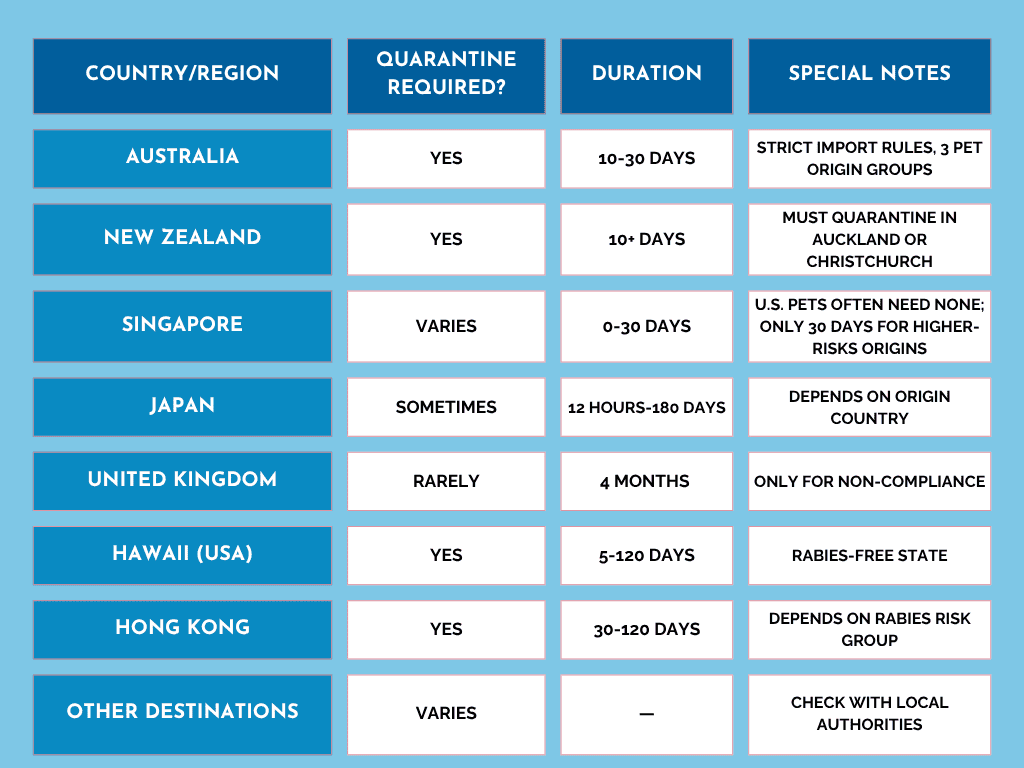
Countries With the Strictest Quarantine Rules
Australia
- Group 1: No quarantine (rabies-free origins)
- Group 2: 10 days in Melbourne
- Group 3: 10–30 days depending on prior ID verification and export documentation in Melbourne
New Zealand
- Minimum 10-day quarantine in Auckland or Christchurch, even if all requirements are met
Singapore
Singapore classifies countries into three rabies-risk schedules, and the schedule determines whether quarantine applies at all:
- Schedule I (rabies-free countries like Australia, New Zealand, UK, Ireland): no quarantine
- Schedule II (includes the U.S.): no quarantine by default — but a mandatory 10-day home quarantine applies if the pet arrives more than 5 days after the owner, or hasn’t been in the owner’s/family’s direct care for at least 6 months
- Schedule III (higher-risk countries): minimum 30-day quarantine at the AQC facility
As of April 2026, pet owners must also appoint an AVS-recognized pet agent to handle import clearance.
Hawaii
- Rabies-free, requires 5 days or less quarantine for compliant pets, up to 120 days for non-compliance
Hong Kong
- Group IIIA: 30-day quarantine
- Group IIIB: 120-day quarantine
- Rabies-free countries have fewer requirements
Countries That Rarely Enforce Pet Quarantine
- European Union: EU Pet Passport allows easier travel between member countries if requirements are met
- Canada: No quarantine for most pets meeting health requirements
- Mainland USA: No quarantine unless arriving from a high-risk rabies country without a valid rabies titer test
Key Factors That Determine Quarantine
- Rabies Status of Origin Country: High-risk countries = longer quarantine
- Compliance With Import Rules: Missing documents or vaccinations can trigger quarantine
- Type of Pet: Dogs and cats are most affected, but rules can apply to other species
How to Prepare Your Pet for Quarantine
Pet Parent Checklist:
- Check the latest regulations for your destination (rules change often)
- Gather required documents (microchip proof, rabies certificate, vet health certificate)
- Complete pre-travel treatments (parasite prevention, vaccinations)
- Book quarantine space early, some facilities fill up months ahead
- Work with a certified pet relocation company like WorldCare Pet for expert guidance

FAQs About Pet Quarantine
How long is pet quarantine?
Anywhere from 12 hours to 4+ months, depending on country and compliance
Can my pet avoid quarantine?
Yes, in some countries, if all requirements are met. In others (like Australia or New Zealand), quarantine is unavoidable
What if my destination isn’t listed here?
It doesn’t mean there are no rules, always check with the official government website
Where can I get updated info for 2026?
Check the official pet import/export authority in your destination country or ask a professional pet transporter
Official Government Links
Final Thoughts
Pet quarantine isn’t something to fear, it’s there to keep pets and people safe. By planning ahead, making sure your pet meets all health and document requirements, and booking quarantine early when needed, you can make the process smooth and stress-free.
If you need help navigating the rules, WorldCare Pet specializes in international pet relocation and can guide you through every step, from paperwork to quarantine bookings.

Moving your pet across the world just got less stressful. Valerie Neyra, Marketing Coordinator at WorldCare Pet and devoted cat mom to Lucky, creates the guides, tools, and resources pet parents need to navigate domestic and international pet transport with confidence. Her mission? Making sure no pet owner feels alone during a global move.