
Published on August 25, 2026
Pet parents planning a move from the USA to Australia usually start with a reasonable assumption: find an airline that flies to Melbourne, book a seat in the hold, done. That assumption falls apart fast. Most international carriers serving Melbourne will not carry a pet on that route at all, and the ones that will are shaped by one rule that eliminates almost every “obvious” option before eligibility or pricing even come up.
Why the Direct-Flight Rule Decides Everything
Australia’s Department of Agriculture, Fisheries and Forestry (DAFF) does not publish a list of approved pet airlines. Which airlines carry pets is entirely up to each airline, not something the government regulates. What DAFF does regulate, in exacting detail, is how a pet is allowed to arrive: as manifest cargo, in an IATA-compliant crate, on a flight that lands directly into Melbourne. A pet cannot clear into Australia by connecting through Sydney, Brisbane, or Perth first. Melbourne is the only port equipped to process an incoming pet, and the flight has to go there before going domestically around Australia.
That single requirement does more to narrow the field than breed restrictions, age minimums, or crate rules combined. An airline can have a perfectly good pet cargo program and still be the wrong choice, simply because its aircraft don’t fly that route.
This is also why the list of realistic options is shorter, and less intuitive, than most pet parents expect walking in.
Which Airlines Actually Clear That Bar?

Foxy, who we helped fly from the USA to Australia on Qantas.
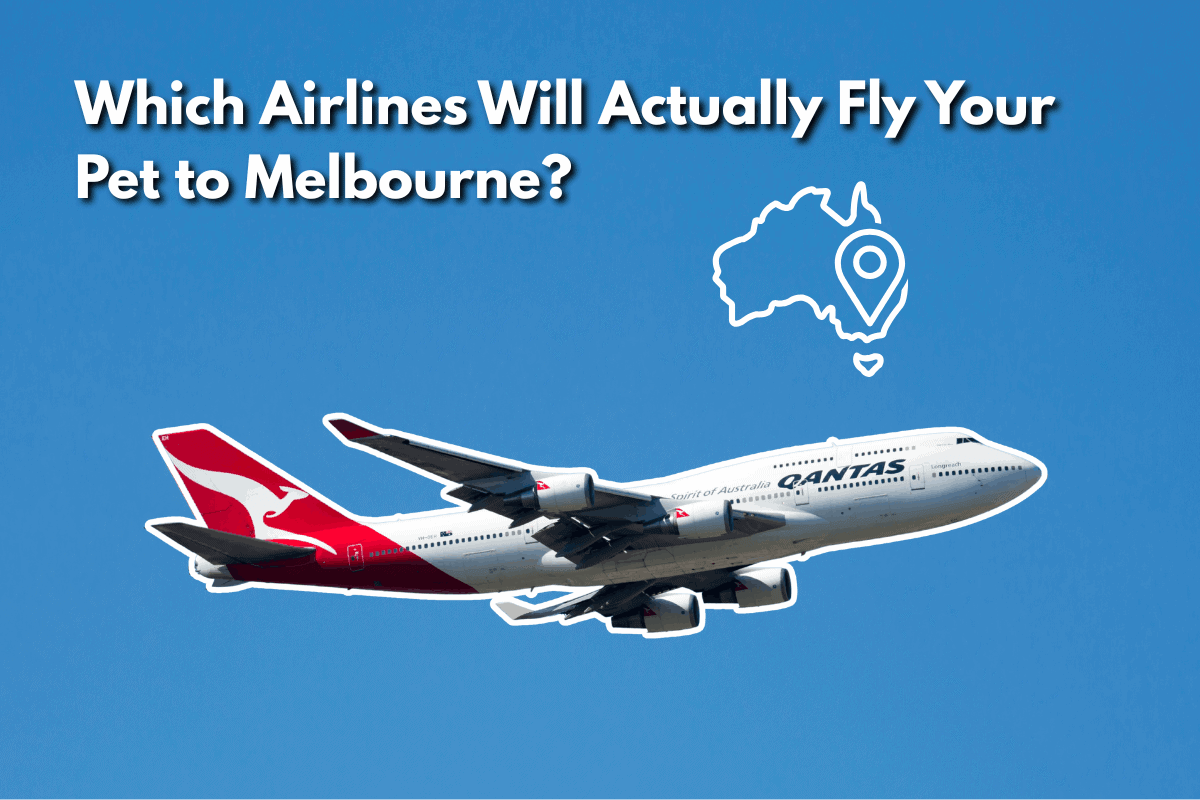
Qantas Freight
This is the one carrier that satisfies the direct-flight rule outright from a US departure city. Qantas operates its own long-haul aircraft into Melbourne and runs a dedicated pet and animal transport program, with its own published eligibility rules, including a 12-week minimum age and additional veterinary certification for pets over 12 years old.
Flat-faced breeds carry an extra layer on top of that. Qantas requires brachycephalic breeds, snub-nosed or flat-faced dogs and cats, to be booked through a pet travel specialist who is specifically approved for brachycephalic movements, not just any general pet travel specialist. This isn’t Qantas being arbitrary: flat-faced breeds are more prone to breathing difficulty under travel stress and heat.
That program isn’t static. Qantas also enforces its own extreme weather policy, grounding pet uplift when forecast temperatures fall outside a set range, and it has run temporary seasonal embargoes at specific US gateways in past years. Those windows shift by year and by departure city, which is exactly the kind of detail that’s worth confirming fresh rather than assuming it matches last year’s schedule.
Please Note: Pets traveling to Australia through Qantas need to do so through a pet travel specialist to ensure compliance with all necessary export and import requirements. Need assistance? Request a quote today.
American Airlines
Gets misdescribed constantly, usually in the direction of “American won’t fly your pet unless you’re military.” That’s not accurate. The military restriction applies only to checked pets booked at the passenger ticket counter, a completely separate program from American Airlines Cargo’s PetEmbark service, which is open to the general public. The real reason American doesn’t work for a Melbourne move has nothing to do with eligibility: American simply doesn’t operate its own aircraft into Melbourne. Any ticket sold under an American Airlines flight number to Melbourne is a codeshare flown by Qantas, not a flight American runs itself, so PetEmbark has no route of its own that satisfies the direct-arrival requirement.
Qatar Airways and Emirates
They have historically carried pets internationally through their hub cargo operations in Doha and Dubai, and can be part of a compliant routing to Australia in some cases. These routings involve an additional transhipment leg and country-specific approval, which adds coordination. For most pet parents moving from the USA, a Qantas Freight departure is the more straightforward path, and Middle East routing tends to make more sense when it’s already part of a broader relocation itinerary.
The Handoff Nobody Talks About: Domestic Airline, International Airline
Here’s the part most airline breakdowns skip entirely, because they treat “which airline” as a single answer instead of a relay.
A pet doesn’t have to fly the same airline for the whole trip. In one WorldCare move, a pet flew American Airlines domestically from Chicago into Los Angeles, then connected onto a Qantas-operated flight direct from LAX into Melbourne. That satisfies DAFF’s rule just fine, because the requirement is about the international leg landing directly into Melbourne, not about a single carrier flying the entire itinerary from start to finish.
This isn’t something Qantas Freight books as a standard online reservation. Coordinating the domestic and international legs correctly, including minimum connection times and making sure both bookings actually line up, is the kind of handoff a pet relocation counselor manages as routine, not something to improvise the week of travel.
Where Pet Parents Get Tripped Up
DAFF’s core requirements, the vaccination timeline, the rabies titre test, the quarantine stay, have stayed largely stable. But DAFF does update specific import conditions during the year, sometimes without much notice: in March 2026, for example, DAFF revised the Brucella canis testing window for intact dogs. That’s exactly the part of the process that benefits most from working with an experienced pet relocation coordinator who tracks these changes as part of the job, rather than confirming them once and assuming they’ll hold.
For the rest of what’s involved in a USA to Australia move, see our guides on Australia’s quarantine requirements, banned and restricted breeds, and flight routing options.
What Stays the Same, No Matter Which Airline Carries Your Pet
Airline options change. These four conditions do not, and every pet entering Australia has to meet all of them regardless of carrier:
- Manifest cargo, every time. A pet cannot travel in the cabin or as checked baggage on this route. Every pet is booked and tracked as manifest cargo.
- A crate that meets IATA standards. The travel crate has to comply with International Air Transport Association Live Animals Regulations and be sized correctly for the pet inside it.
- A flight that lands directly in Melbourne. No domestic hop counts, landing in Sydney and connecting to Melbourne, for instance, does not satisfy this requirement. The international leg has to arrive directly into Melbourne.
- Transhipment has its own rules. A pet can connect through another country’s airport without formally clearing that country’s customs, but only if the pet stays airside the entire time and that country’s authority permits it.
Questions Worth Asking Before You Book
A route that looks straightforward on an airline’s website can still fall apart at the airport if one of these hasn’t been confirmed ahead of time. Before locking in a departure date, it’s worth having clear answers to:
- Is this airline’s cargo program actually open to the general public right now?
- Does this airline fly its own aircraft into Melbourne, or is this a codeshare?
- Is there a seasonal embargo affecting the planned departure city or month?
- Does the pet’s breed carry additional restrictions?
- If the route involves more than one airline, has someone confirmed the domestic leg leaves enough time for cargo check-in on the international flight?
If more than one of these comes back uncertain, a pet relocation counselor can help sort it out before anything gets booked.
Frequently Asked Questions
Does the Australian government maintain a list of approved pet airlines? No. DAFF regulates how a pet is allowed to travel, not which airline carries it. Airline participation is entirely up to each carrier.
Can a pet fly in the cabin on the way to Australia? No. Every pet entering Australia travels as manifest cargo, regardless of airline. Cabin travel and standard checked baggage are not options on this route.
Can a pet connect through another Australian city before reaching Melbourne? No. The flight into Australia has to land directly into Melbourne. A domestic connection, landing in Sydney and transferring to Melbourne, for example, does not meet the requirement.
Is American Airlines ever part of a Melbourne pet move? Yes, but not as the airline flying the pet into Australia. American can serve as the domestic US leg ahead of a Qantas-operated international flight. American’s PetEmbark cargo program itself has no route of its own into Melbourne.
Do Qatar Airways or Emirates work for a Melbourne move? They can, but the routing adds a transhipment leg through Doha or Dubai and each hub’s own import rules on top of Australia’s. It tends to make more sense as part of a broader relocation than as the default choice for a US departure.
What happens if a seasonal embargo affects an already-planned travel date?
The airline typically reschedules the pet onto the next available compliant flight, but this can shift the whole moving timeline. It’s part of why confirming current embargo status before locking a date matters more than checking it once early in planning.
Is professional coordination necessary, or can this be booked independently? It isn’t required, but airline pet-cargo policy changes often enough, and the routing requirements are specific enough, that professional coordination meaningfully lowers the risk of a booking that looks fine and isn’t.

Moving your pet across the world just got less stressful. Valerie Neyra, Marketing Coordinator at WorldCare Pet and devoted cat mom to Lucky, creates the guides, tools, and resources pet parents need to navigate domestic and international pet transport with confidence. Her mission? Making sure no pet owner feels alone during a global move.