
Published on August 18, 2026
Last updated:
If you’re planning a move to the UK with your dog, this is one question worth answering before you book a single flight: is your dog even allowed in the country?
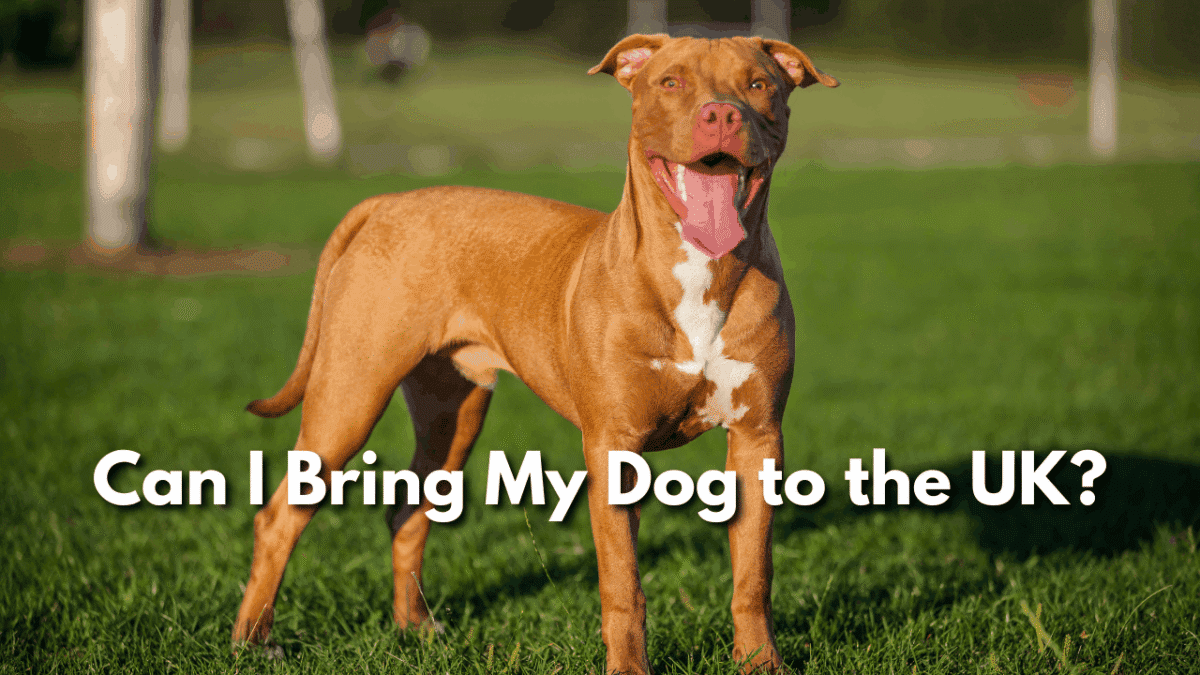
The UK doesn’t restrict certain breeds the way some countries do. It bans them outright, and unlike most import rules, this isn’t something that can be fixed with extra paperwork or a longer timeline. Here’s what every pet parent moving to the UK needs to know.
Which Dog Breeds Are Banned in the UK?
Five breeds and types are banned under the UK’s Dangerous Dogs Act 1991:
- Pit Bull Terrier
- Japanese Tosa
- Dogo Argentino
- Fila Brasileiro
- XL Bully
It’s illegal to own, breed, sell, gift, abandon, or import any of these breeds or types in the UK, unless very specific and limited exceptions apply.
Can I Bring a Banned Breed Into the UK If My Dog Already Has an Exemption?
No, and this is the detail that catches people off guard. Certificates of Exemption only apply to dogs that are already living in Great Britain, and the certificate’s conditions are built around that residency: the dog must be kept at a fixed UK address, and the owner is required to notify authorities if the dog is exported. There is no process for using an existing certificate to bring a banned breed in from abroad. If your dog is a Pit Bull Terrier, Dogo Argentino, Japanese Tosa, or Fila Brasileiro, importing them into Great Britain is not legally possible, regardless of documentation, training, or temperament.
The XL Bully has its own added wrinkle: the window to register a UK-based dog for a Certificate of Exemption closed on January 31, 2024. Even dogs currently living in Great Britain can no longer newly apply. For a dog moving in from another country, there is no exemption route at all.
My Dog Doesn’t “Look Like” a Banned Breed on Paper. Does That Matter?
This is the part that surprises most pet parents: UK law identifies banned dogs by physical characteristics, not by breed registration, pedigree papers, or DNA testing. Authorities assess a dog’s body shape, head structure, height, and build against a defined type description. A dog with no Pit Bull or XL Bully ancestry on paper can still be classified as a banned type if it physically matches the legal definition, and a mixed-breed dog with partial ancestry from a banned type can be affected as well.
This means “my dog isn’t technically a Pit Bull” isn’t a reliable test on its own. If your dog’s breed or mix includes any of the five banned types, or if you’re genuinely unsure, this needs to be resolved before you plan a UK move, not after your dog has already landed.
What Happens If a Banned Breed Arrives in the UK Without Authorization?
The dog can be seized by authorities at the border or after arrival, and the outcome is then decided by the courts. Owners can also face imprisonment or a fine. It’s a legal and emotional outcome no pet parent wants to face partway through a relocation, which is exactly why this is worth confirming at the very start of your planning, not after flights and paperwork are already underway.
What About Dogs That Just Look Similar to a Banned Type?
Breeds that resemble XL Bullies or Pit Bulls in a general way, like American Bulldogs, Staffordshire Bull Terriers, or other recognized bully-type breeds, are not automatically banned. The distinction comes down to the specific physical type definition set out in law, not a general resemblance or a breed name that sounds similar. If your dog falls into this gray area, this is exactly the kind of question worth getting a clear answer on before you commit to moving dates.
What Should I Do If I’m Not Sure Whether My Dog Is Affected?
Start with a conversation, not a guess. A Pet Relocation Counselor experienced in UK moves can help you think through where your dog’s breed or mix stands, and if there’s any uncertainty, can point you toward the right verification steps before you invest in flights, vet appointments, or a moving date. Getting clarity early protects your timeline, your budget, and most importantly, your dog.
The Bottom Line
Most pet parents moving to the UK are focused on microchips, rabies timelines, and health certificates, and rightly so. But for a small number of dogs, the very first question isn’t about paperwork timing. It’s about whether the move is legally possible at all. If there’s any chance your dog’s breed or mix falls into one of the UK’s banned categories, sort that out before anything else.
Planning a move to the UK? Reach out to WorldCare Pet and we’ll help you figure out exactly what your dog’s move requires, starting with the questions that matter most.
Related Blogs
- Stress-Free UK Move: What Cat & Dog Owners Must Know
- How to Move Your Pet from the US to the UK
- Which Dog Breeds Does Portugal Consider Dangerous or Restricted?

Moving your pet across the world just got less stressful. Valerie Neyra, Marketing Coordinator at WorldCare Pet and devoted cat mom to Lucky, creates the guides, tools, and resources pet parents need to navigate domestic and international pet transport with confidence. Her mission? Making sure no pet owner feels alone during a global move.