

Published on August 5, 2026
For pet parents moving from the US to South Korea, it isn’t complicated once you understand the real slowdown: it’s rarely the paperwork itself, it’s the rabies titer test lab turnaround. Get that piece moving early, and the rest of the process is manageable.
Here’s the short version: your pet needs an ISO-compliant microchip, a current rabies vaccination, a rabies antibody titer test result of 0.5 IU/mL or higher, and a USDA-endorsed health certificate. Below is the full breakdown, the order these steps need to happen in, and what tends to catch pet parents off guard.

Dougie, on his 4th journey with our team at WorldCare Pet Transport to South Korea
The Basic Requirements
- ISO-compliant microchip. Your pet needs an ISO 11784/11785-compliant microchip, and it has to be implanted before the rabies vaccination that will be used for Korean entry. If your pet’s existing chip isn’t ISO-compliant, a new one needs to go in first, and the vaccination sequence has to restart from that date.
- Current rabies vaccination. The rabies vaccine must be current at the time of travel. Your pet must be at least 90 days old when vaccinated.
- Rabies antibody titer test (FAVN/RNATT). This is the step that determines your timeline more than any other. A blood sample is drawn after the rabies vaccination and sent to an approved laboratory to confirm a passing result greater than or equal to 0.5 IU/ml. The result is valid for up to 24 months.
- USDA-endorsed health certificate. A USDA-accredited veterinarian completes the health certificate, and USDA APHIS endorses it. The certificate is valid for 30 days from the date of export, which is a notably wider window than some destinations that require endorsement within 10 days of arrival like Thailand or 14 days like Hong Kong.
Note: While not a requirement, our team at WorldCare Pet recommends your pet receive the general vaccines below to help ensure their health and safety during travel. This includes:
- Dogs: DHPPL+ (Distemper, Hepatitis, Parvovirus, Parainfluenza, and Leptospirosis) & Bordetella (Kennel cough)
- Cats: FVRCP (Feline Viral Rhinotracheitis, Calicivirus, Panleukopenia)
What Happens If the Titer Test Isn’t Done in Time
This is worth planning around directly. If the titer test or microchip implantation can’t be completed before departure, or if the test result is older than 24 months, your pet can still travel, but the missing step has to be completed after arrival in Korea. In that case, your pet will likely be held in quarantine at your own expense until the procedure or lab results are finalized. A valid USDA endorsed health certificate is still required. This is the single biggest reason to start the titer process as early as possible.
A Realistic Timeline
Most pet parents should plan for 3 to 4 months from start to finish, depending on your pet’s existing vaccination and titer history. This timeline needs to account for several sequential steps: microchip implantation, the rabies vaccine, the rabies titer test (results can take 4 to 6+ weeks), the USDA-endorsed health certificate, and finally, your pet’s travel.
For the latest pet import requirements, always check South Korea’s Animal and Plant Quarantine Agency page directly.
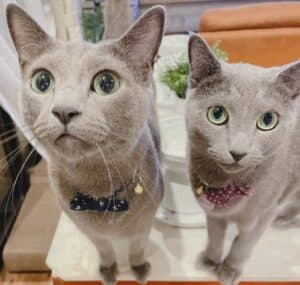
Louis and Bella, two Russian Blue cats, moving to South Korea with our team at WorldCare Pet Transport.
Frequently Asked Questions
Will my pet need to be quarantined in South Korea? If all documentation, including a valid titer result, is complete and correct on arrival, quarantine is not required. Quarantine becomes likely if the titer test or microchip wasn’t completed before travel.
How long is the rabies titer test valid for? Up to 24 months from the date the blood sample was drawn. If your pet’s existing titer result is older than that, a new test is required.
Does my puppy or kitten need a rabies titer test? No. Pets under 90 days old are exempt from both the rabies vaccination and titer test requirements.
Are there any restrictions when it comes to pets moving to South Korea? South Korea does not have any breed restrictions when importing pets into the country. Please note, if you are bringing 10 or more cats and/or dogs to South Korea, you must submit advance notice to the Animal and Plant Quarantine Agency.
What’s the most common reason pet moves to South Korea get delayed? Lab turnaround on the rabies titer test. The blood draw itself is quick, but waiting on results from an approved laboratory is usually the longest single step in the process, which is why starting early matters more here than the paperwork does.
Planning a Move to South Korea With Your Dog or Cat?
The titer test timeline is the one part of this move that punishes procrastination, and it’s also the easiest part to get ahead of if you start early. WorldCare Pet Transport has coordinated pet relocations to South Korea and 80+ other countries for over 25 years, and we manage the vaccination sequencing, titer lab coordination, and certificate timing so pet parents aren’t tracking lab results on top of everything else involved in an international move.
We offer full door-to-door pet relocation support so you don’t have to worry about a thing. Get a free quote today, and a member of our team would be happy to discuss the right plan for you.

Moving your pet across the world just got less stressful. Valerie Neyra, Marketing Coordinator at WorldCare Pet and devoted cat mom to Lucky, creates the guides, tools, and resources pet parents need to navigate domestic and international pet transport with confidence. Her mission? Making sure no pet owner feels alone during a global move.