
Published on September 23, 2026
The quick answer: No. Dogs and cats traveling from the United States to Italy do not need to quarantine and do not need a rabies titer test as long as all requirements are met. They must arrive with an ISO-compliant microchip, a valid rabies vaccination given after that microchip, and a USDA-endorsed EU health certificate. A titer test only comes into play in specific situations, which are covered below.
Key takeaways
- No quarantine for compliant dogs and cats arriving from the US.
- No titer test, because the US is on the EU’s list of approved non-EU countries.
- Microchip first, rabies vaccine second, then a 21-day wait before entry.
- Starting October 2026, a new EU health certificate format applies to non-commercial and commercial moves of dogs, cats, and ferrets.
Does Italy Quarantine Dogs and Cats From the US?
No. Italy follows the European Union’s pet travel rules, and pets arriving from the US under those rules do not quarantine. If your pet’s microchip, rabies vaccination, and endorsed health certificate are in order, your pet is cleared at the airport and goes home with you the same day.
This is often confused with destinations like Australia or New Zealand, which do require quarantine for pets from the US. Italy does not.
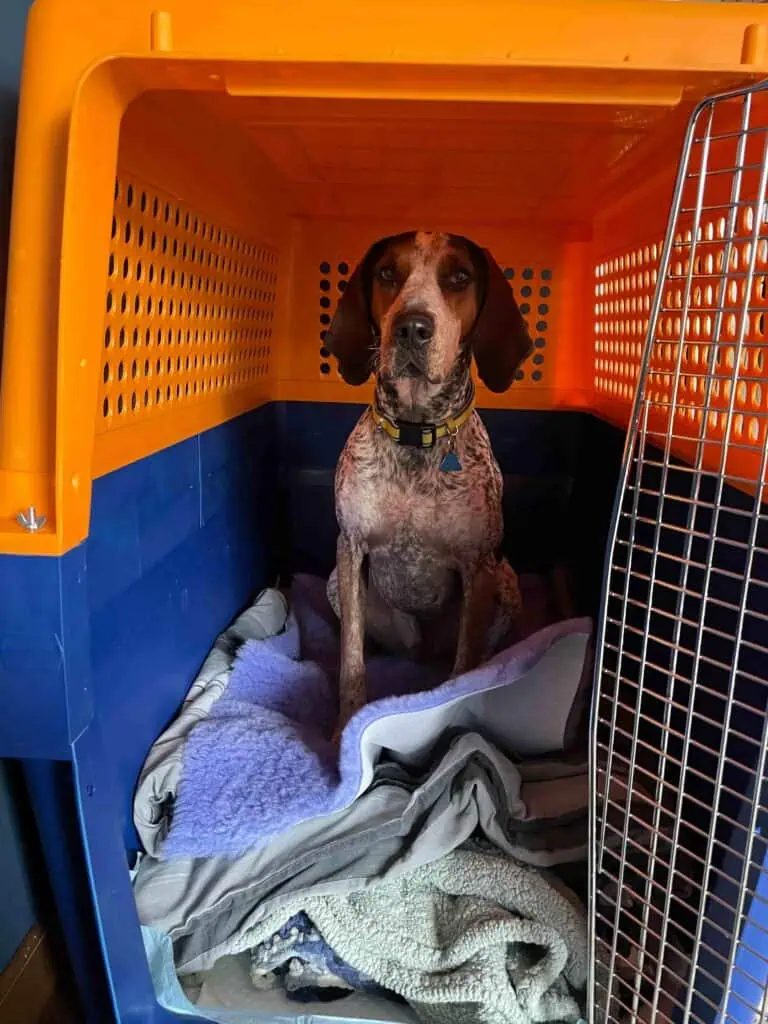
Gunner, getting comfortable in his travel crate ahead of his USA to Italy move.
Why Don’t US Pets Need a Rabies Titer Test for Italy?
The EU keeps a list of non-EU countries with a well-controlled rabies situation. The United States is on that list, so pets traveling from the US skip the rabies antibody titer test and the three-month waiting period that follows it.
That removes one of the longest parts of a typical international pet move. It is also why a US-to-Italy move is one of the more manageable EU relocations.
When Would a Pet Traveling to Italy Need a Titer Test?
A titer test is required when a pet is coming from a country that is not on the EU’s approved list. Common examples include moves that start in parts of South America, Africa, or Asia.
Routing can matter too. If your pet’s trip passes through a country that isn’t on the EU’s list, the titer exemption still applies, but only if your pet stays within the aircraft (or other transport) or the airport’s international transit zone, has no contact with animals that can carry rabies, and you sign a declaration confirming both. If your pet leaves the transit zone, a titer test is required.
If a titer test is needed, the blood sample is drawn at least 30 days after rabies vaccination. It is tested at an EU-approved lab, and pets generally wait three months from the sample date before entering the EU. This is why your Pet Relocation Counselor will ask where your pet has lived before building a timeline.
What Does Italy Require Instead?
For dogs and cats traveling from the US, the core requirements are:
- An ISO-compliant microchip (15 digits), implanted and scanned before the rabies vaccination.
- A rabies vaccination given after the microchip. After a primary vaccination, your pet must wait at least 21 days before entering Italy, and the vaccination must still be valid on the day of entry. For EU travel, a primary shot is only valid for one year, even if it’s a 3-year vaccine.
- An EU health certificate completed by a USDA-accredited veterinarian and endorsed by USDA APHIS. USDA endorsement must happen within 10 days of your pet’s arrival in the EU.
- Arrival through an approved point of entry, where documents and microchip are checked.
Most family moves use the non-commercial health certificate. It applies when you’re moving five or fewer pets, you aren’t selling or transferring ownership of them, and you travel within five days before or after your pets (they can fly with you or with someone you authorize). If any of those conditions aren’t met, the move falls under the EU’s commercial import rules, which use different paperwork.
What Happens If Paperwork Isn’t in Order When My Pet Arrives?
This is where quarantine can come up, even for pets from the US. If documents are incomplete, dates are out of sequence, or the microchip cannot be read, the veterinary authorities at the point of entry can act. They may hold the pet under official supervision until requirements are met, or require the pet to return to its origin. The costs are typically the pet parent’s responsibility.
The most common causes are simple sequencing issues, like a rabies shot given before the microchip or an endorsement outside the 10-day window. Having a pet relocation counselor check the timeline before the vet appointment prevents most of them.
Is Italy’s Pet Health Certificate Changing in 2026?
Yes. New EU health certificates take effect October 1, 2026 for non-commercial dogs and cats traveling from the US. Certificates already in process on the old format must be endorsed by September 30, 2026. If your pet travels in October or later, confirm your vet is using the updated form.
Where Does My Pet’s Entry Check Happen?
Pets entering the EU from the US are checked at a designated “travellers’ point of entry,” usually the first EU airport they arrive at. If your pet connects through another EU country on the way to Rome or Milan, the check typically happens at that connecting airport rather than in Italy. Because that airport has to be an approved entry point, it affects which routings work for your move.
Does My Dog Need Tapeworm Treatment for Italy?
No. Tapeworm treatment is required only for a few EU destinations, such as Ireland, Finland, and Malta. Italy is not one of them.

Charlie and Lucy moved from the US to Italy with WorldCare Pet, and they take their quality control seriously.
Can Puppies and Kittens Travel to Italy From the US?
Not until their rabies vaccination is valid. The EU does not allow unvaccinated young animals to enter from outside the EU. Rabies vaccines are given at 12 weeks at the earliest, followed by the 21-day wait. That makes most puppies and kittens about 15 weeks old before they can travel. Pets under 3 months old are not allowed to enter Italy.
Does a 3-Year Rabies Vaccine Count for Italy?
Yes, as long as it’s still valid on the day your pet enters Italy and there has been no lapse in coverage. If a booster is given before the previous vaccine expires, no new 21-day wait is needed, as long as the primary vaccination is also listed on the health certificate. Keep in mind that a primary rabies shot is only valid for one year for EU travel, even if it’s a 3-year vaccine, and any shot given before your pet was microchipped doesn’t count. If coverage lapsed, the new shot counts as a primary vaccination and the 21-day wait applies again.
Do Cats Follow the Same Rules as Dogs?
Yes. Dogs, cats, and ferrets follow the same microchip, rabies, and health certificate requirements for Italy. Neither quarantine nor a titer test applies to cats traveling from the US.
How Far Ahead Should I Start Planning a Pet Move to Italy?
If your pet needs a new rabies vaccination, the legal minimum is 21 days after that vaccine. If your pet’s boosters are current, there’s no waiting period, but the health certificate still has to be issued and endorsed by USDA within 10 days of arrival. Either way, the minimum leaves little room for vet appointments, endorsement turnaround, or flight availability, so we recommend starting at least one to two months ahead. Summer routings fill early, and seasonal temperature restrictions can limit which flights accept pets. Airlines also make the final call on the day of travel, so a flexible schedule makes it easier to adjust if plans change.
Ready to Plan Your Pet’s Move to Italy?
Italy is a straightforward destination for pets from the US when each step happens in the right order. A WorldCare Pet Relocation Counselor can review your pet’s microchip, vaccination history, and travel dates and build a timeline that fits your move. Request a free quote to get started.

Moving your pet across the world just got less stressful. Valerie Neyra, Marketing Coordinator at WorldCare Pet and devoted cat mom to Lucky, creates the guides, tools, and resources pet parents need to navigate domestic and international pet transport with confidence. Her mission? Making sure no pet owner feels alone during a global move.